
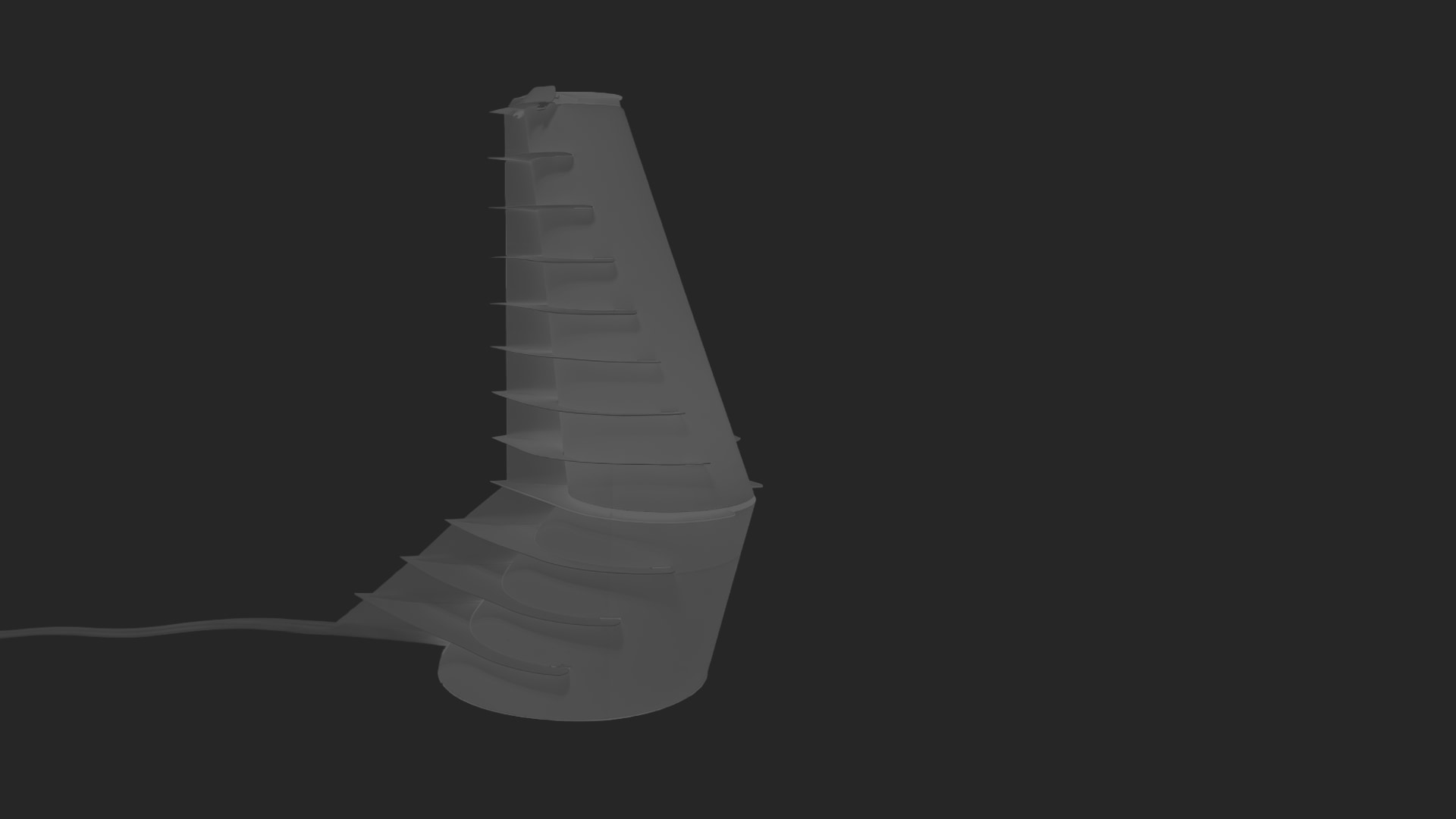
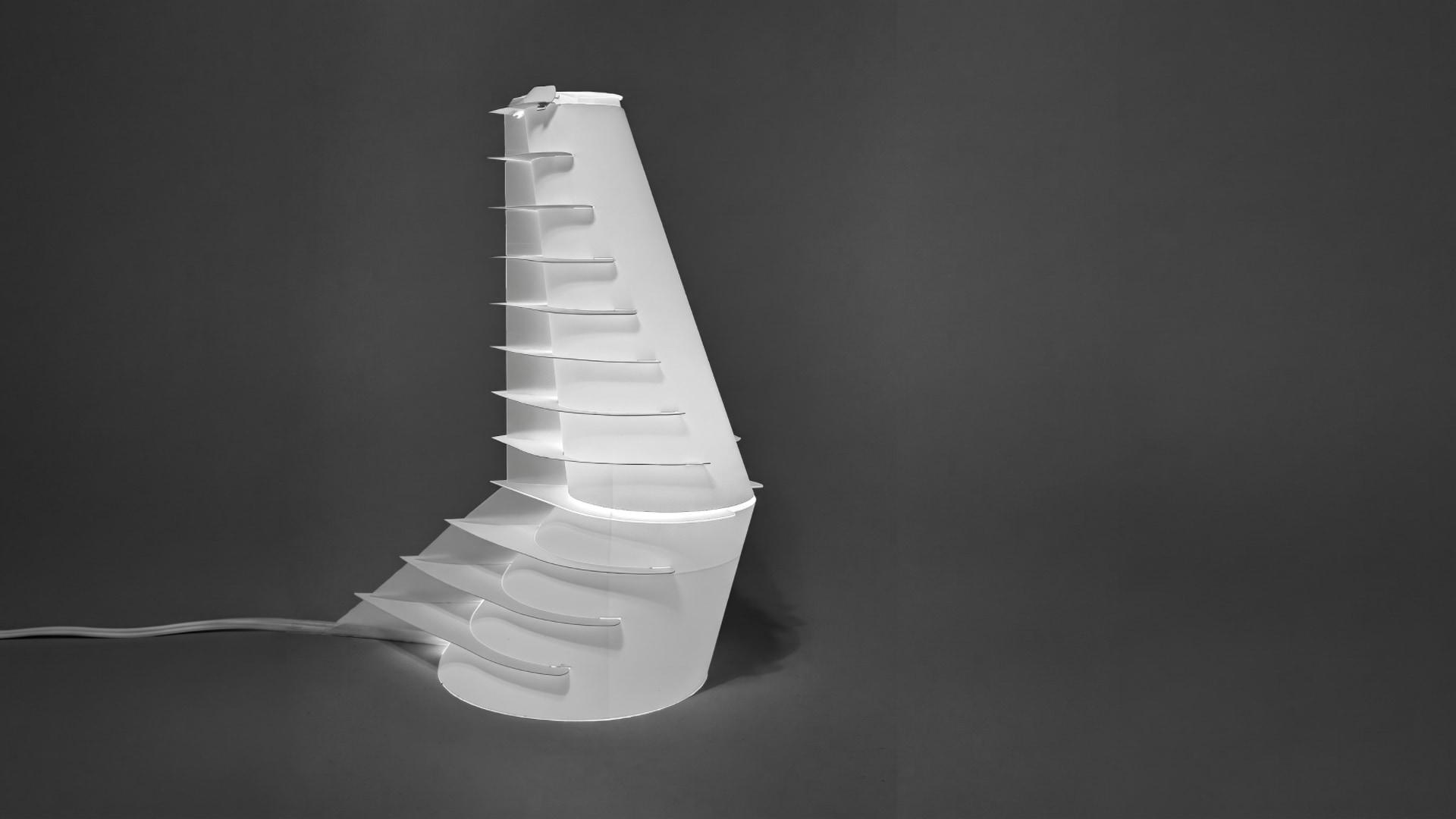
Flatpack Lamp
An Ikea style flatpack lamp that can be assembled with relative ease. Laser cut polypropylene and polyethylene sheet, held together solely with tabs, no glue.
2025
Inspiration
Asymmetrical balance and rhythm.
The two design principles I was given to work from.

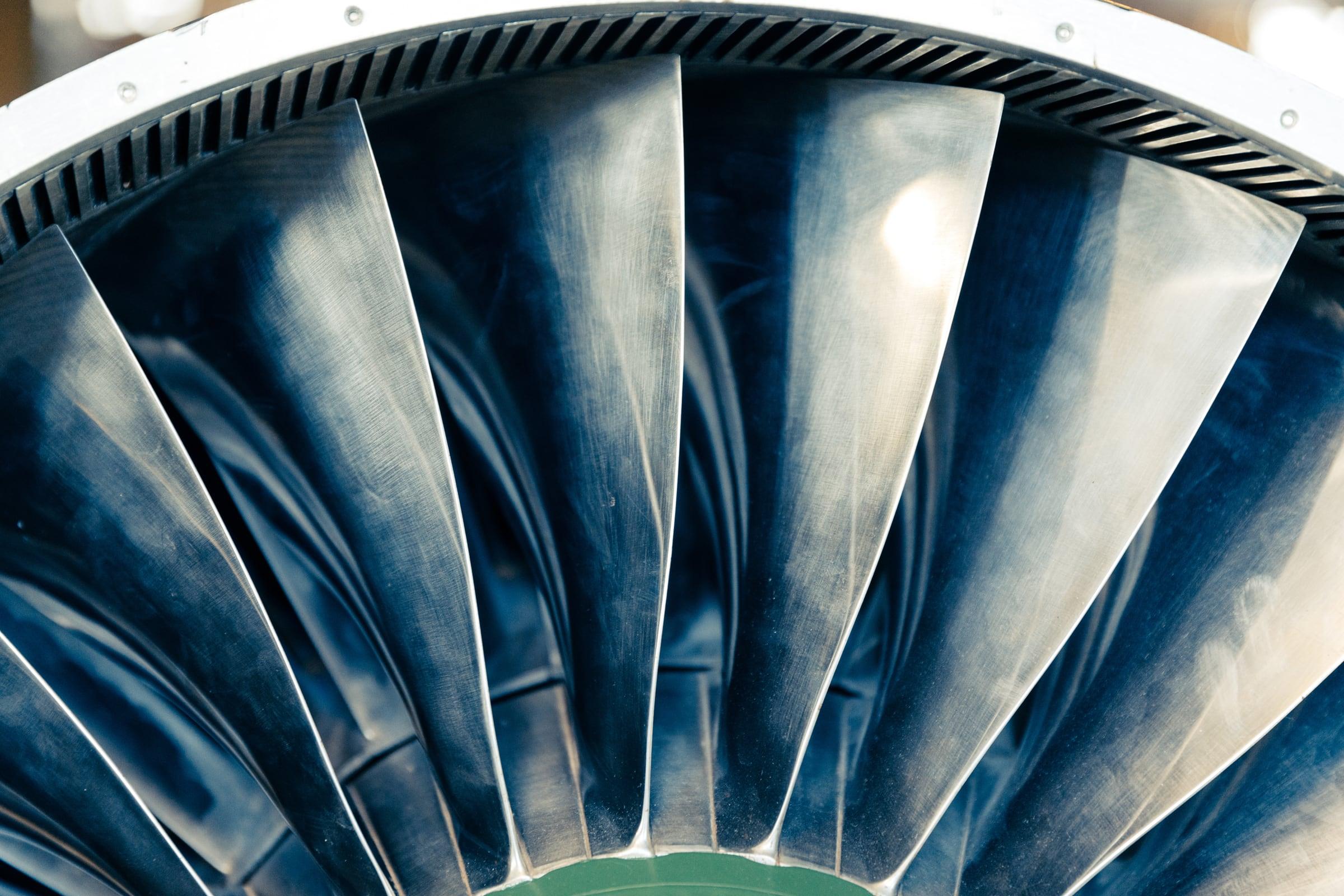
I was inspired by aviation design. The rhythm of flap track fairings, turbo fan blades and the aesthetic of vintage aircrafts.
Ideation
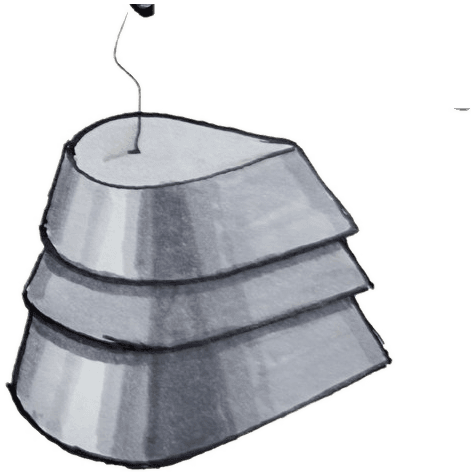
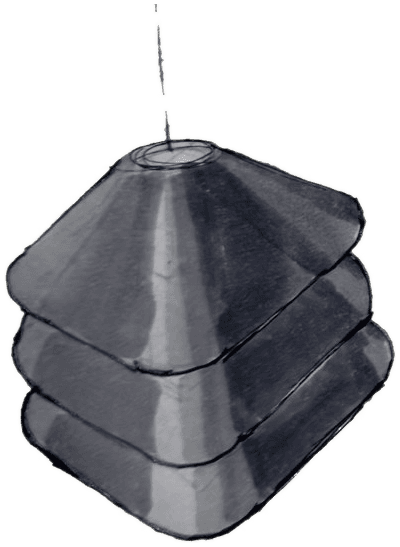
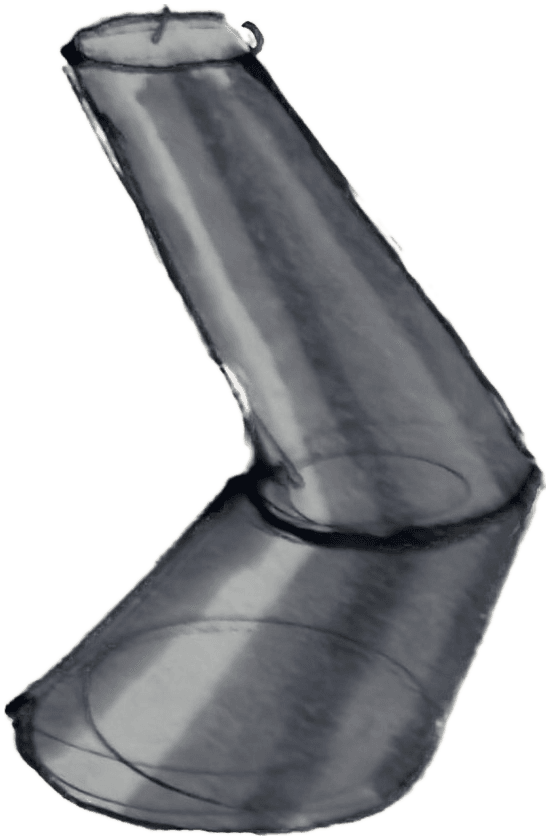
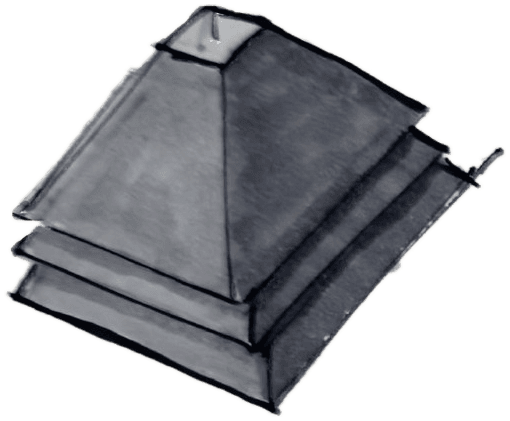
Rough sketches guided me through my initial scale models.
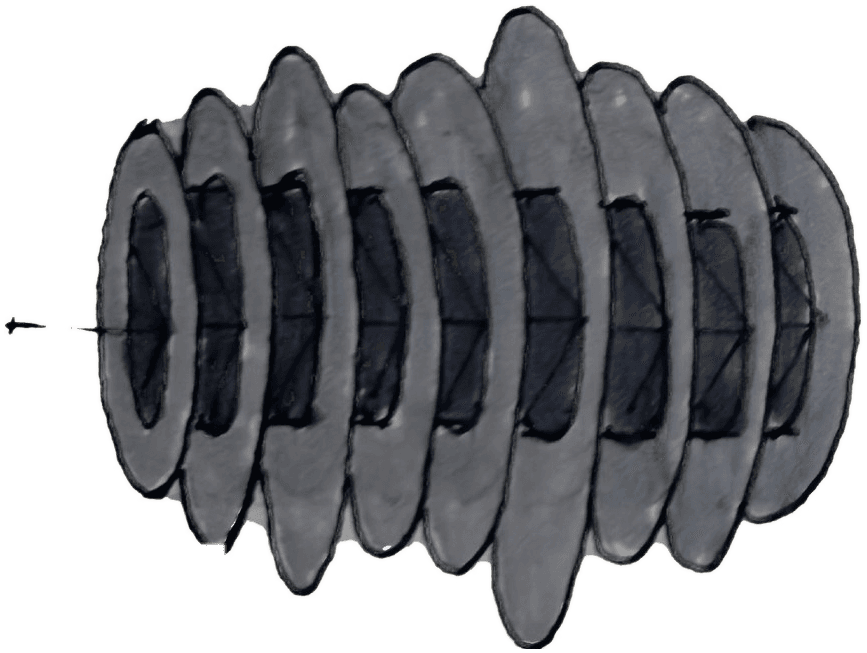
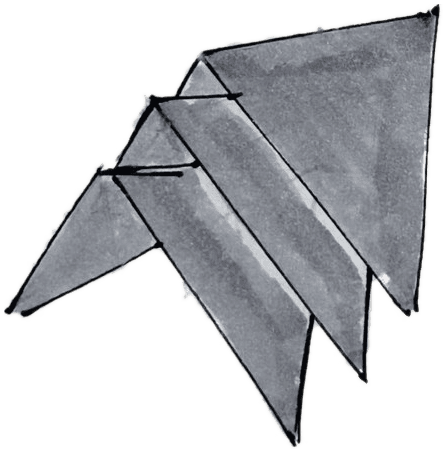
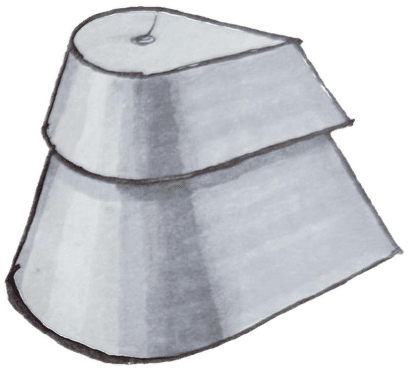
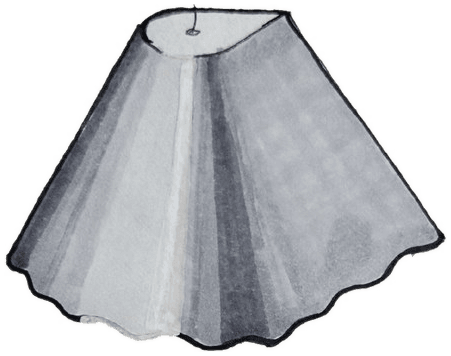
Initial models
At 1/4 scale I focused on shape, texture and how I might control light.
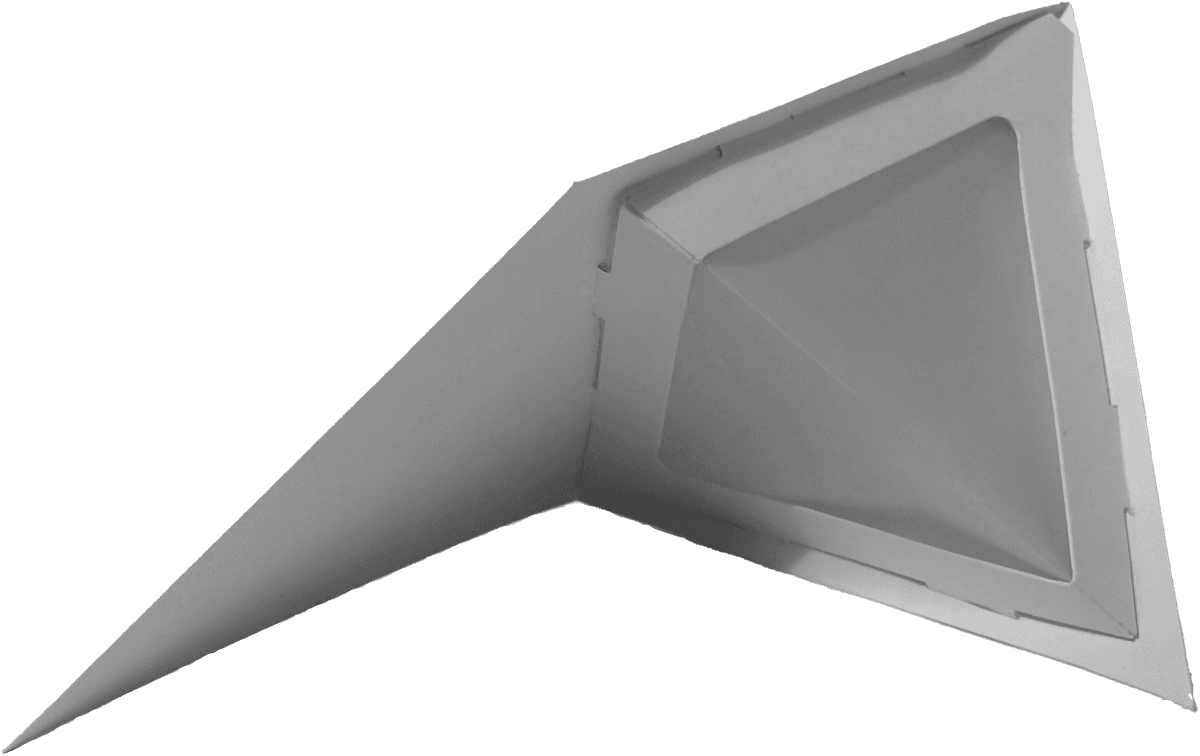
Folded
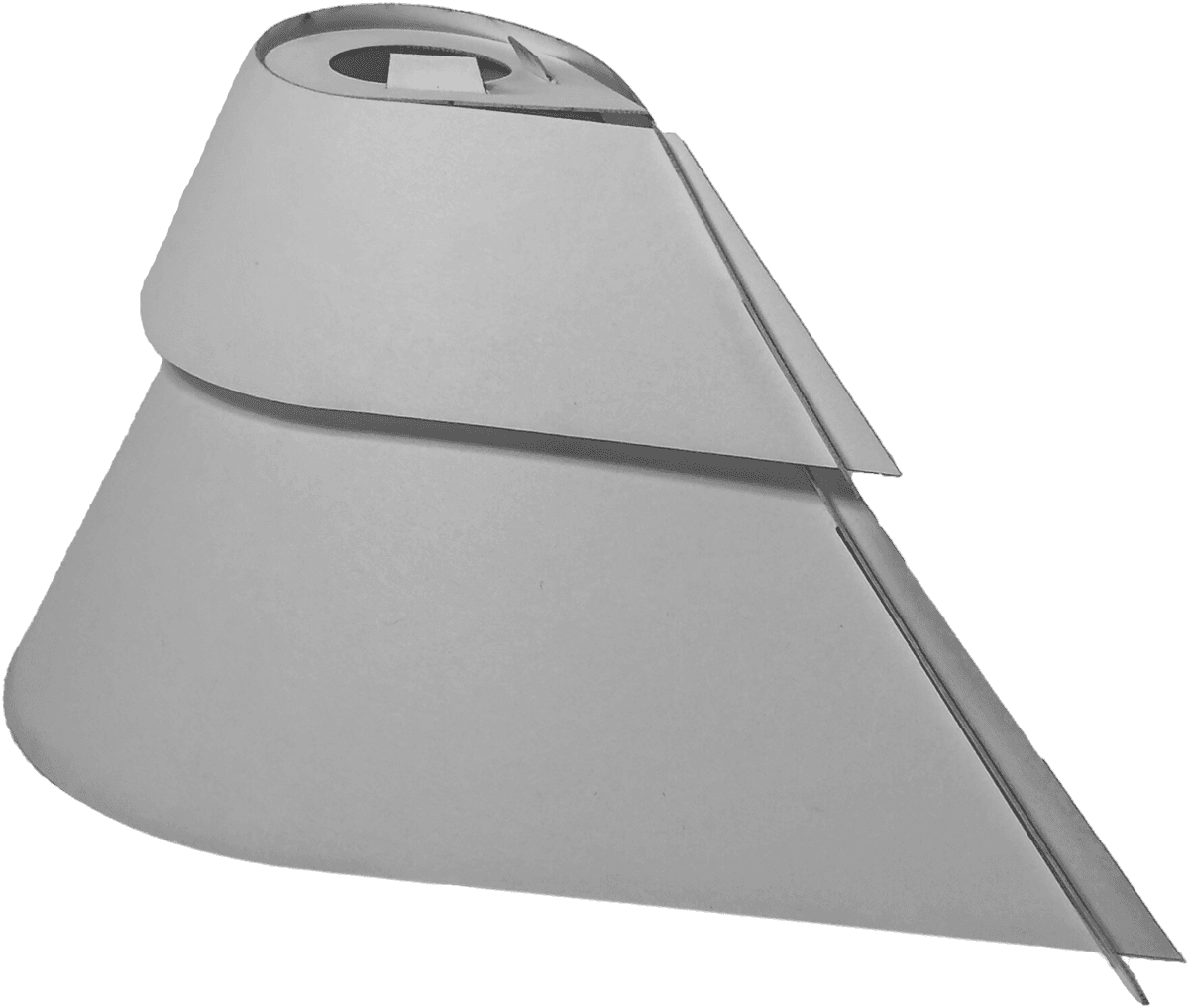
Stepped
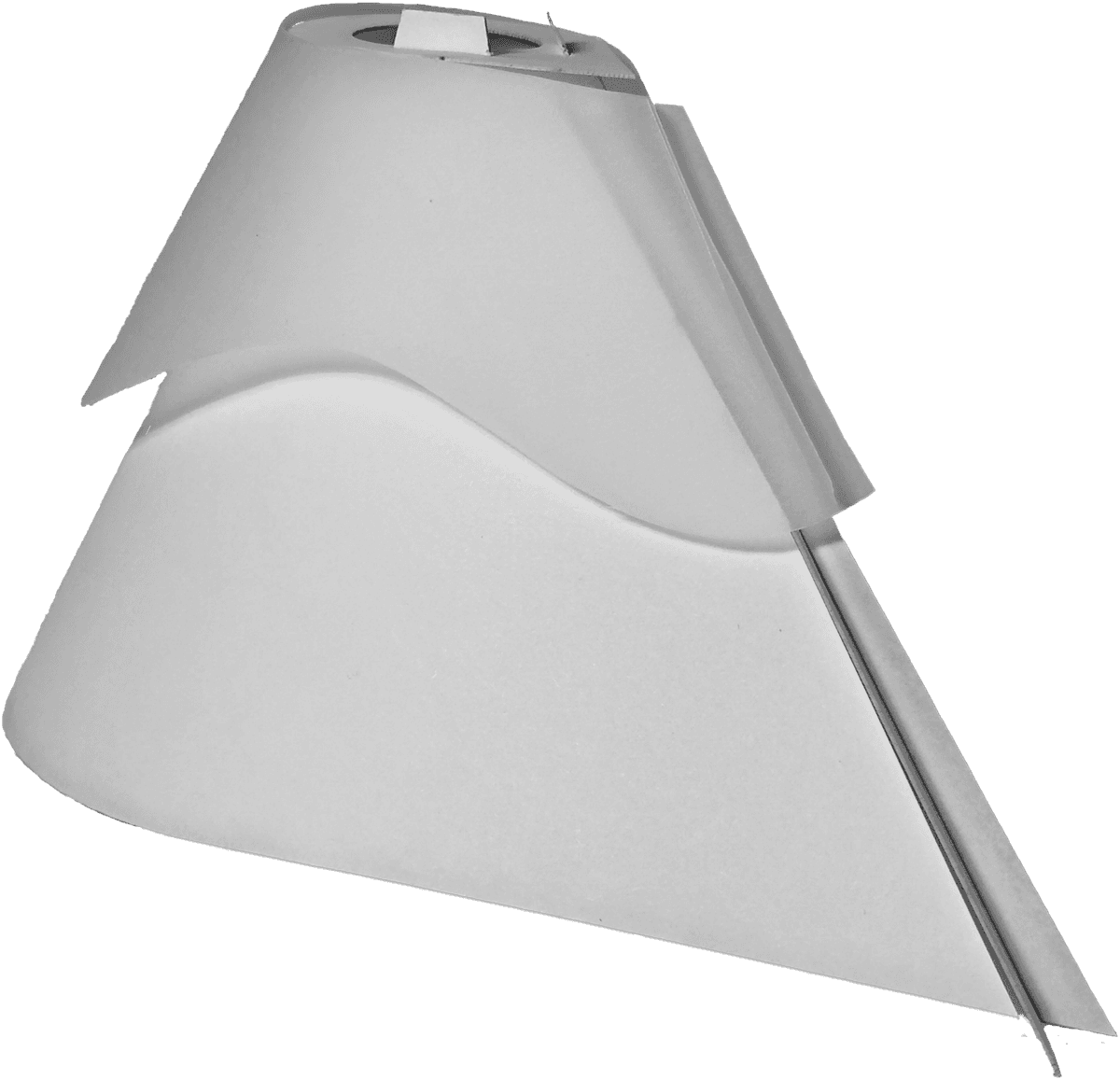
Wavy seam, with spine
Prototyping
The design demanded precision, so I modelled it in Rhino before building at full scale.
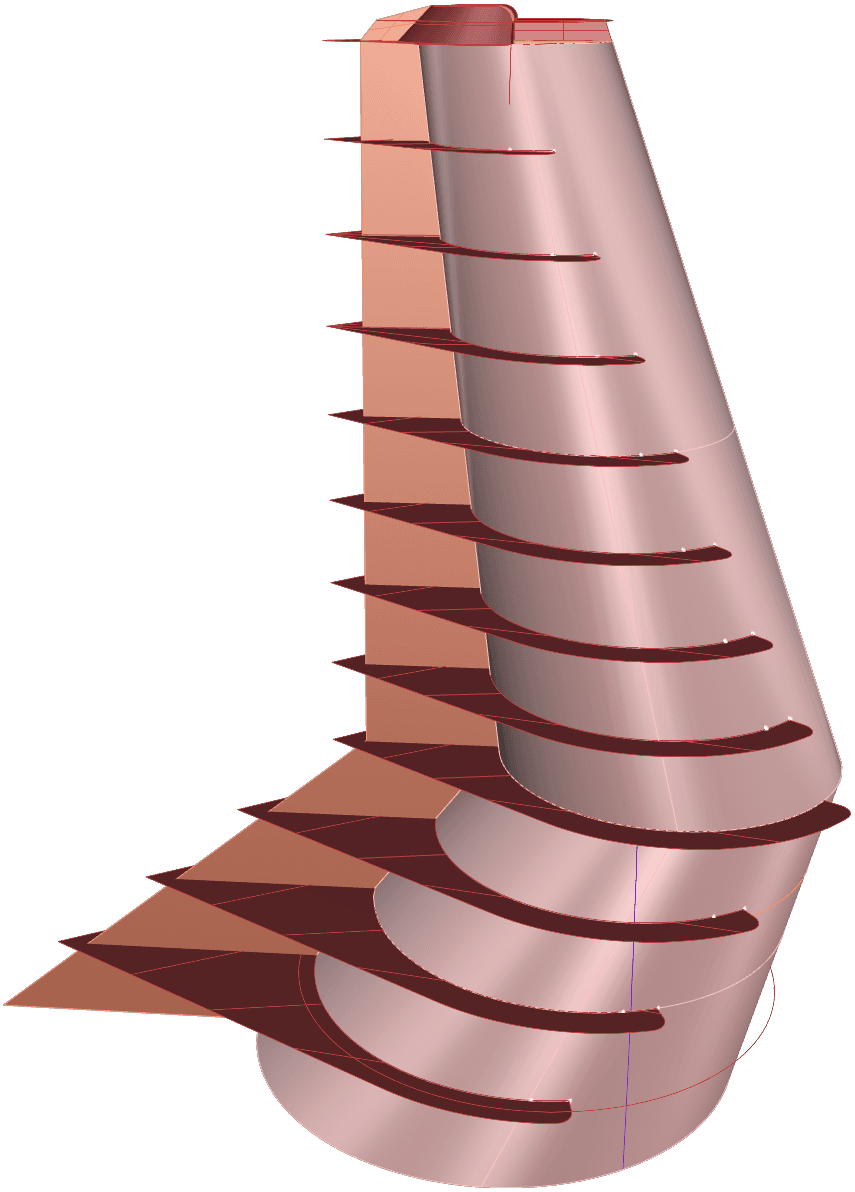
Rhino
It gave me the precision I needed where the fins meet the lofted shape, and made the move to laser cutting easier.
Full scale models
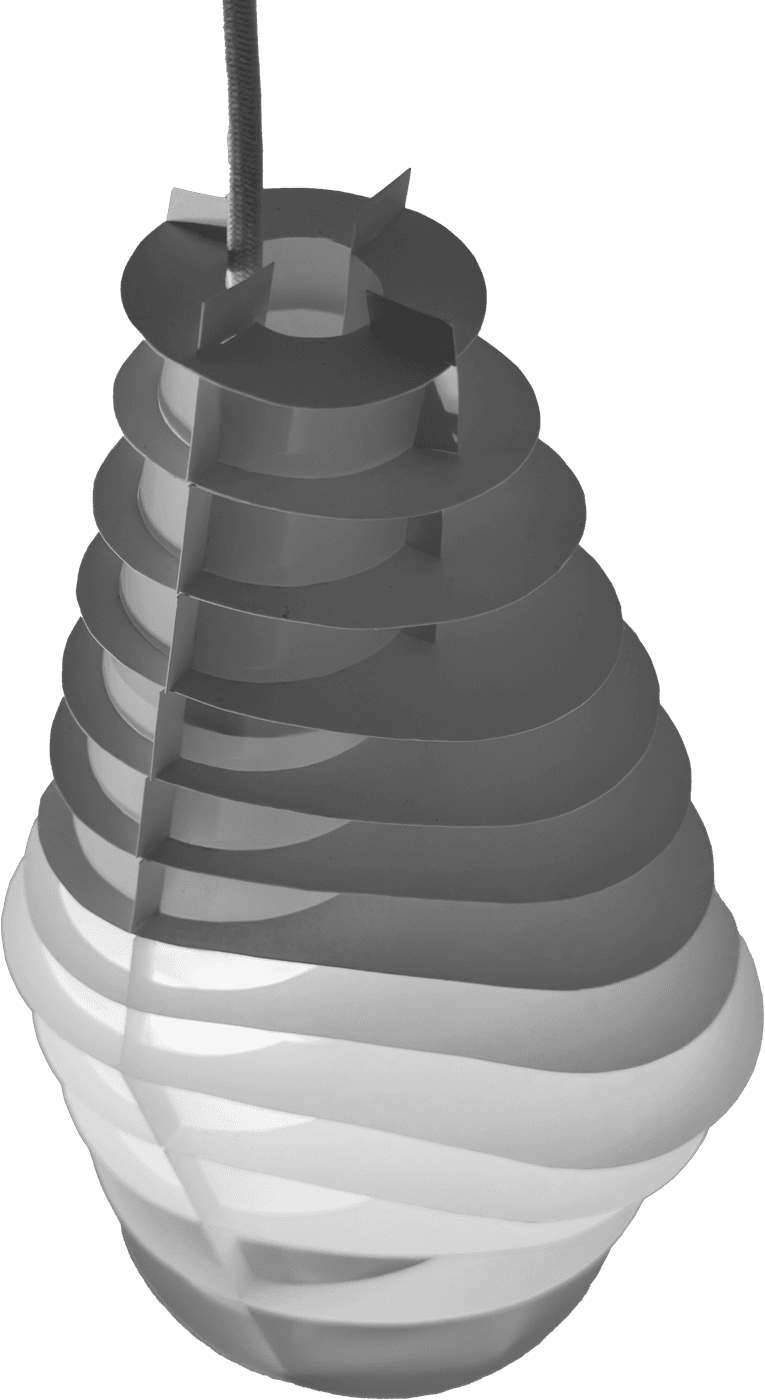
First: a pendant with an internal structure. Sound, but difficult to assemble, and light couldn't diffuse evenly.
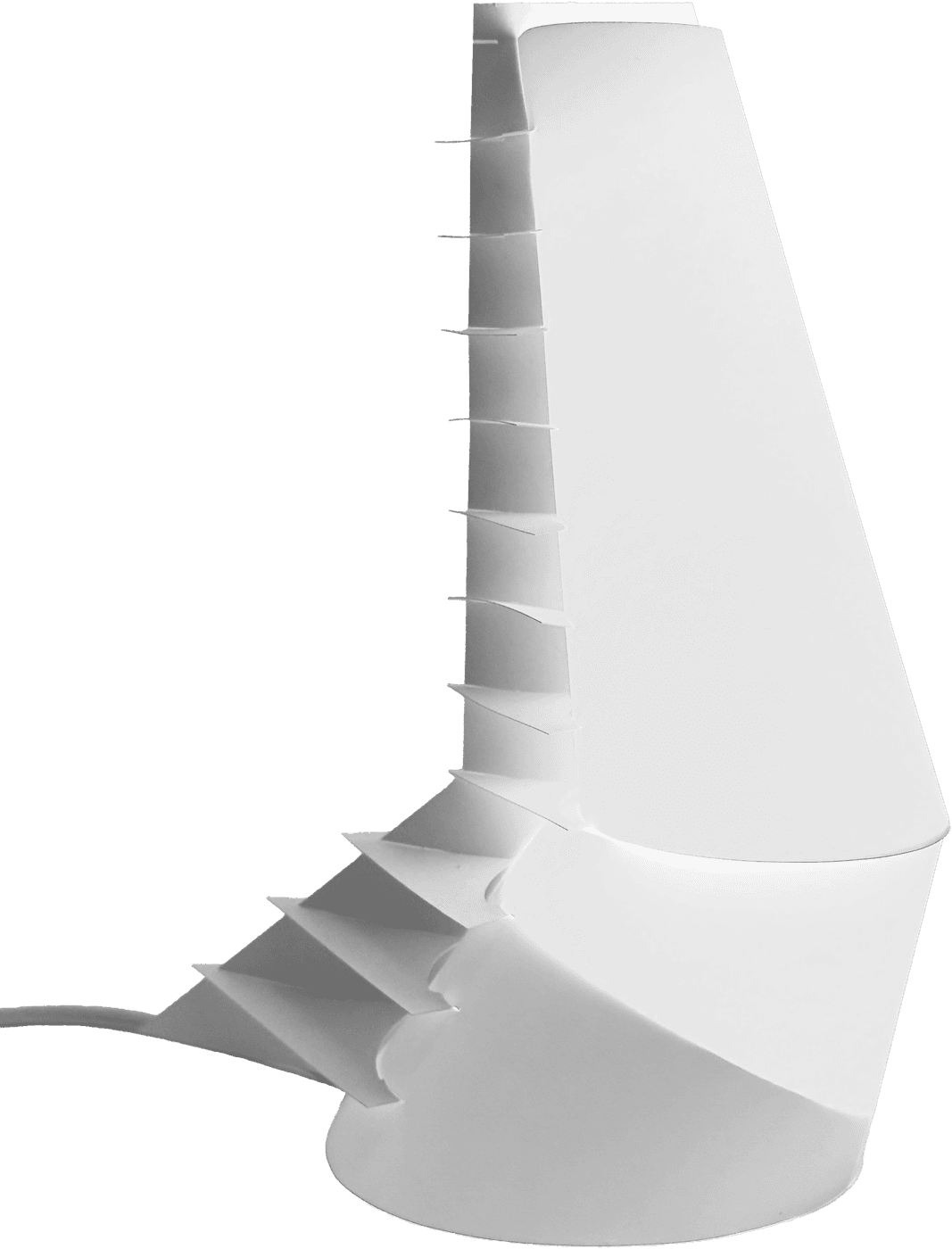
Second: a central spine made assembly far easier, and removing the internal structure evened out the light.
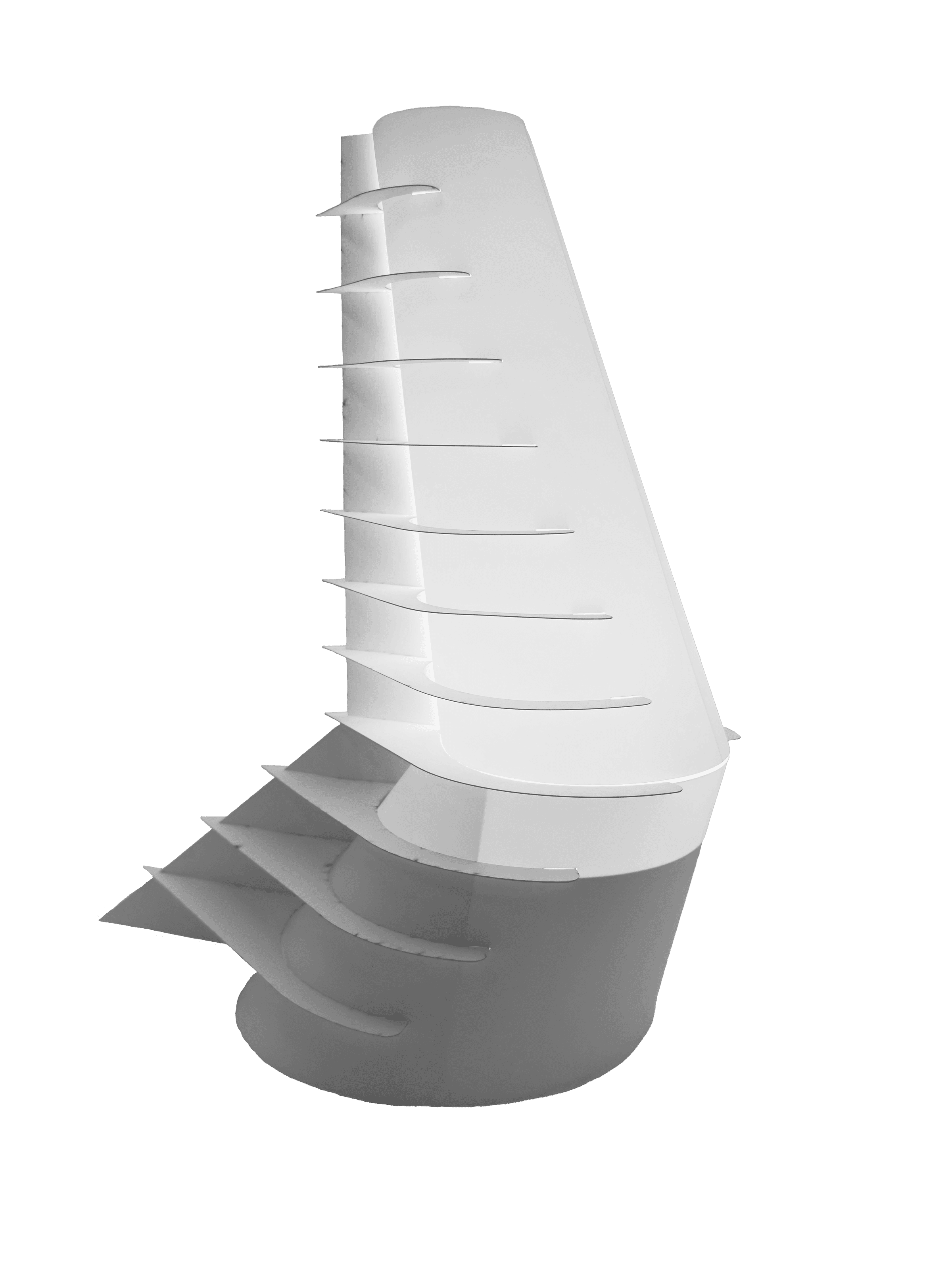
Third: solved the instability of the angled bulb mount and moved where the fins end, for interest from all angles.
Final model
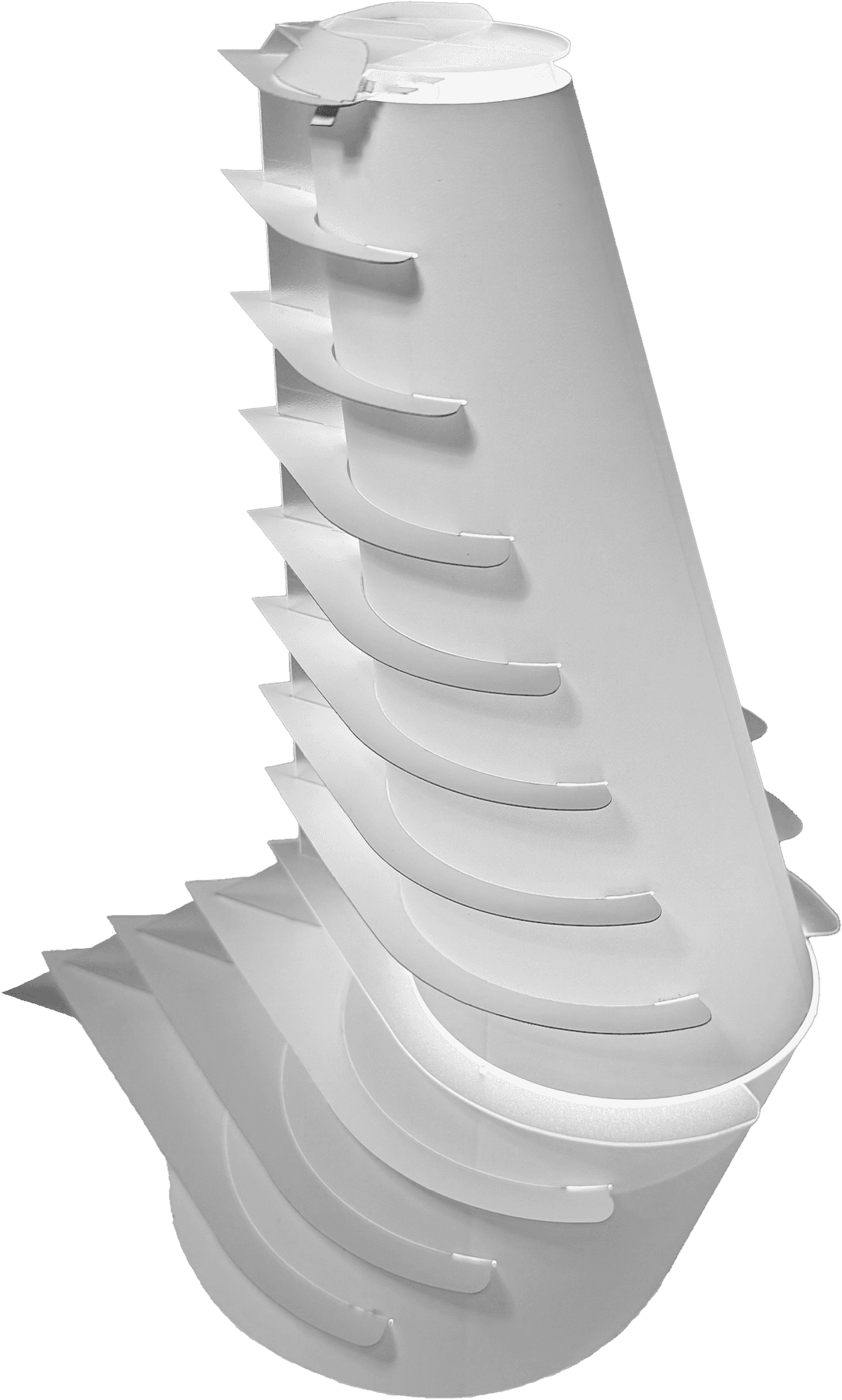
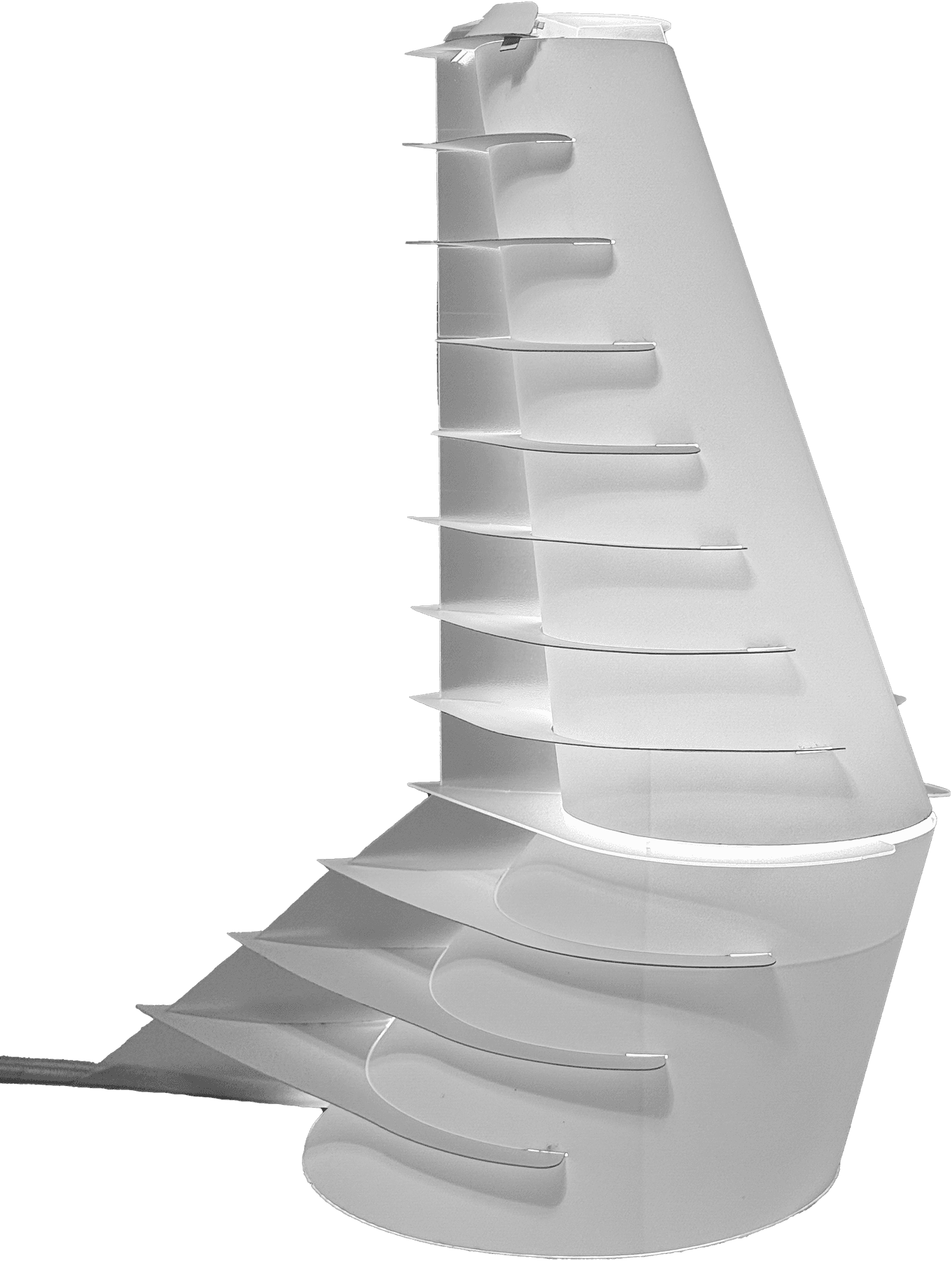
Polypropylene and polyethylene sheet replaced the laser cut Bristol board. A new top cap controls the light, and a refined internal structure gives continuous, even diffusion through the whole form.
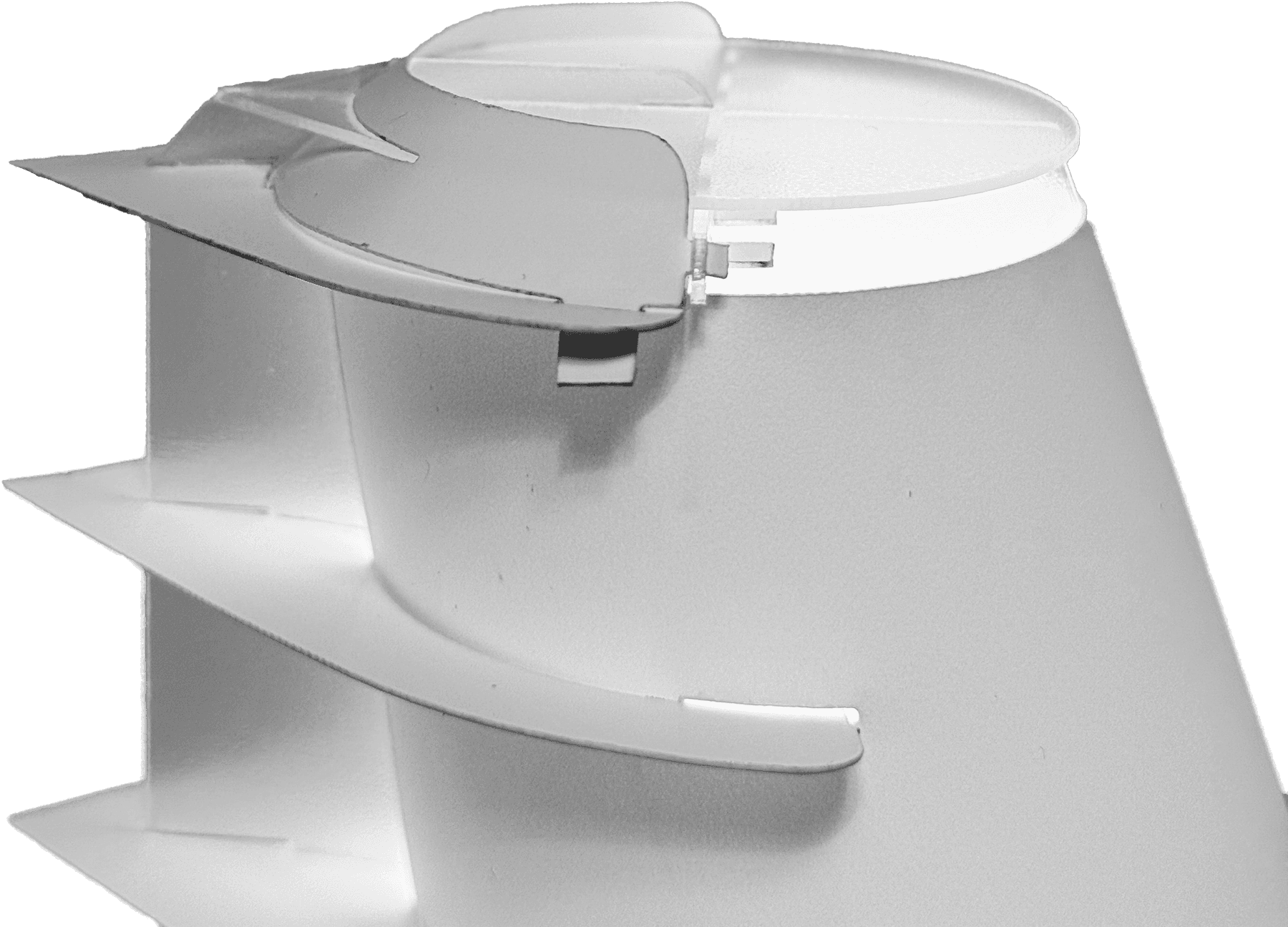
Top cap
Assembled with tabs, it locks the lofted shade from shifting when the lamp is moved.