Ramp Racer
A gravity powered race car I designed, built and raced for my 3D Realization 2 class.
2026
Overview
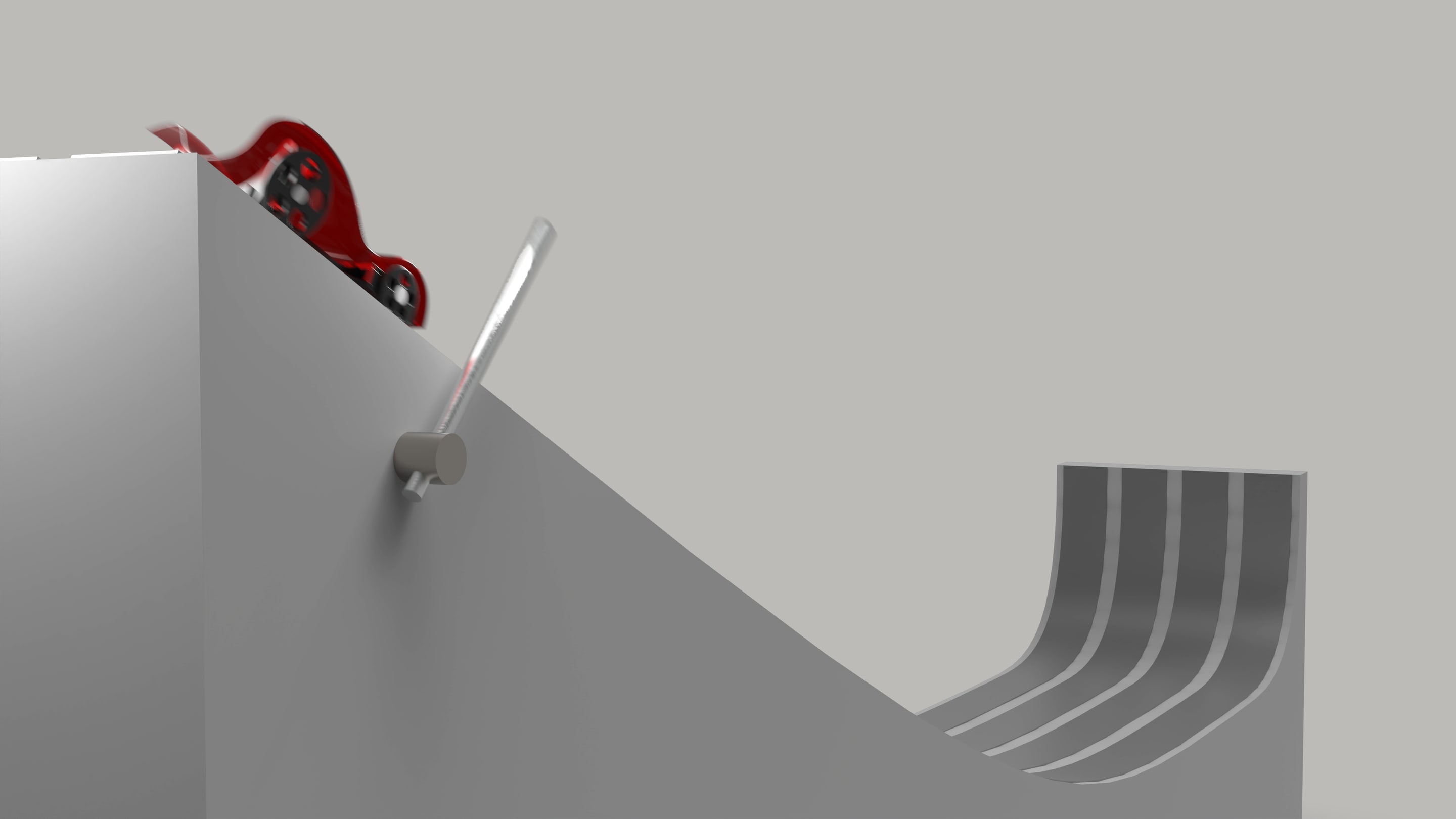
Graded on creativity rather than time, I took the race as an opportunity to exercise my prototyping skills. The ramp had four parallel tracks, each with a raised center section.
Constraints
Nothing on the car could be 3D printed.
I could print tools to help make it. Materials came primarily from the shop, and off the shelf components were limited to standard hardware and bearings.
- 500 g
- weight limit
- 12" × 4.5"
- size limit
- 100 g
- lightest time bonusLighter cars earned bonuses in steps, down to under 100 g.
Concept
Why the hubs pivot
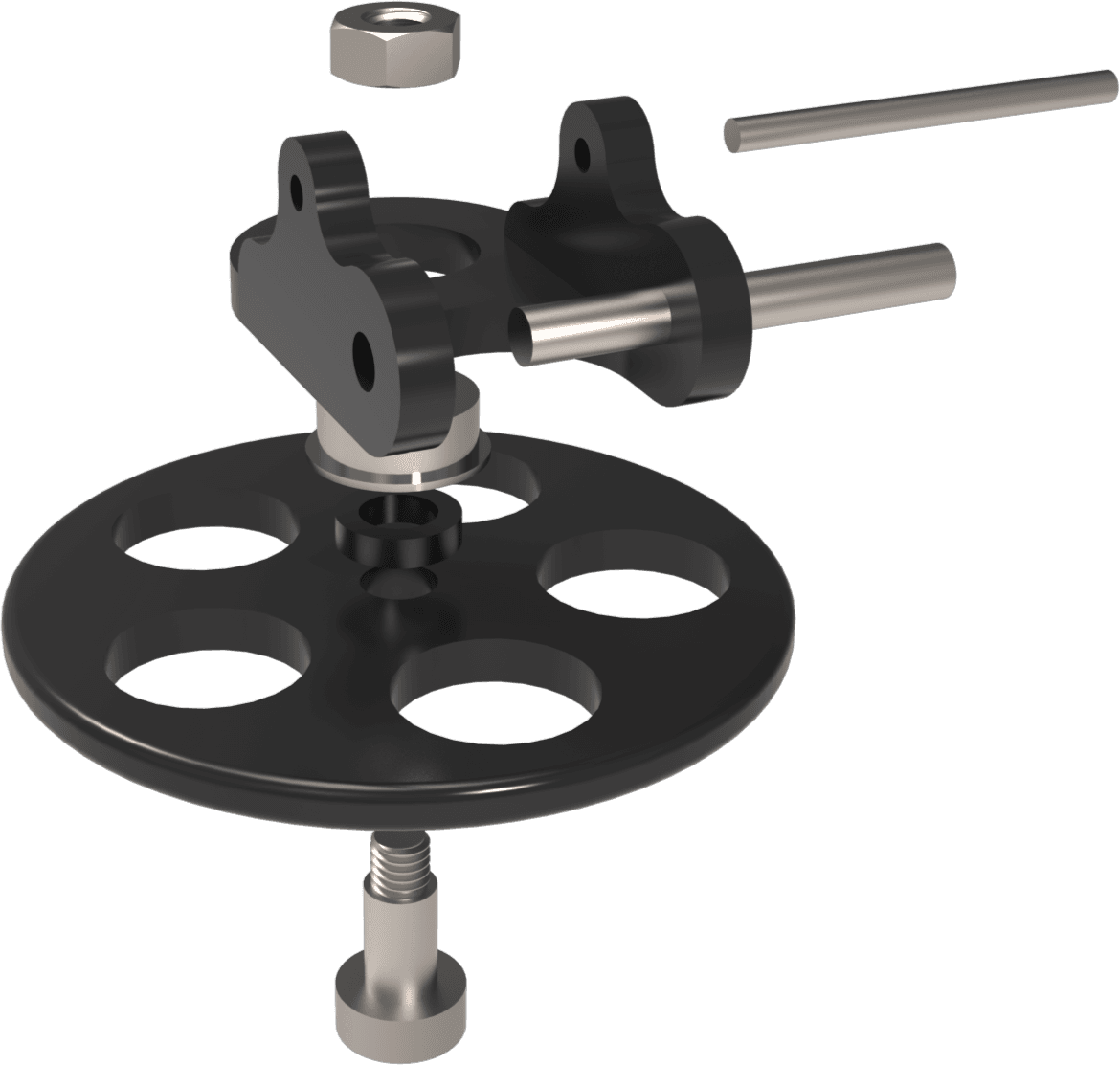
The track was worn and inconsistent, so cars bounced and lost momentum. Pivoting hubs pinch the center track, holding consistent contact with compliance a rigid wheel setup could not achieve.
The rule against 3D printing dictated a lot of my design decisions.
Only a few materials could be laser cut in the shop. Acrylic was easy to design for and cut, and I liked how it looked, though it is brittle. Aluminum was easy to turn on the lathe, so the first version's axles and pivots used it.
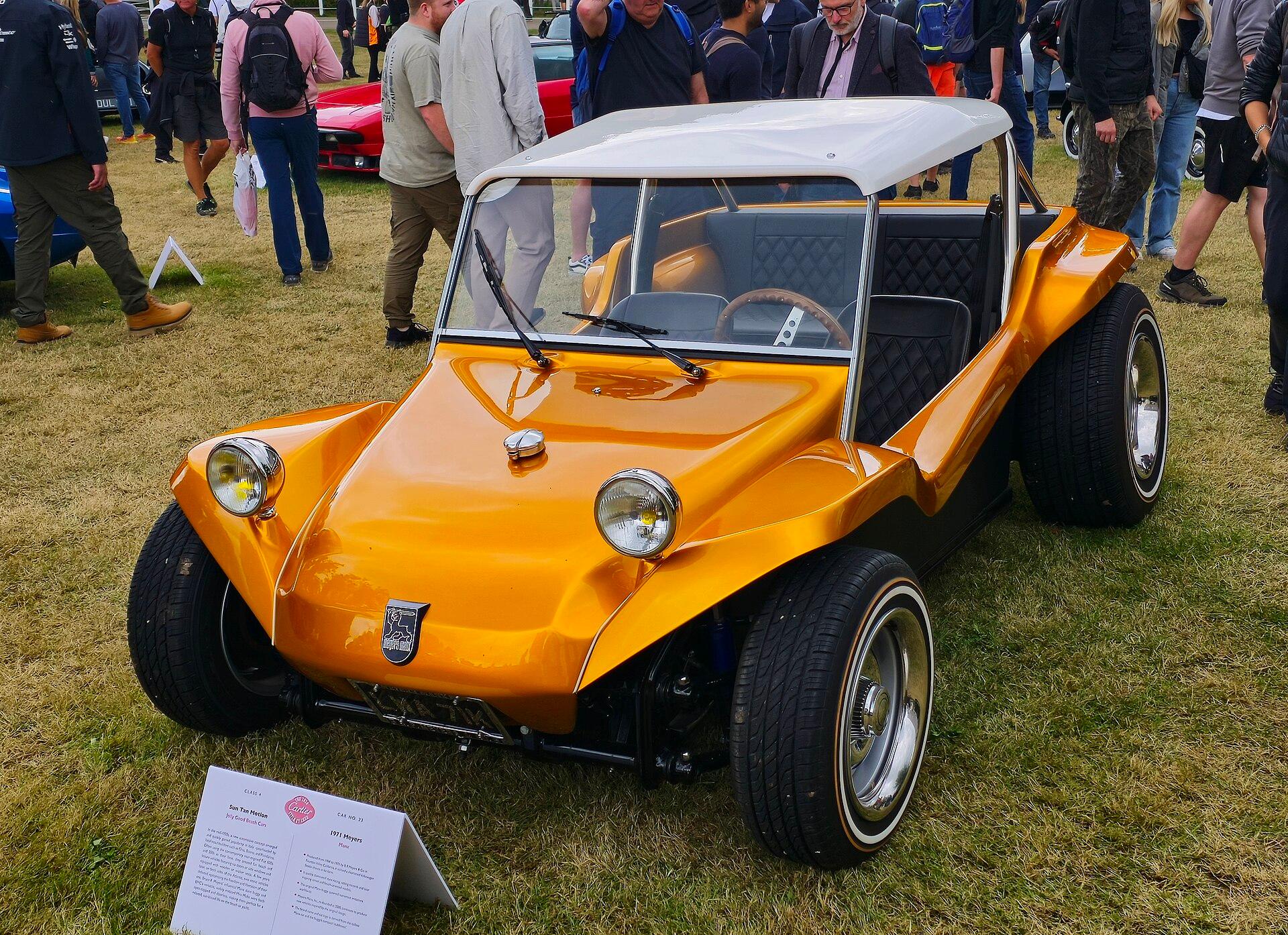
1971 Meyers Manx. Photo: Calreyn88, CC BY-SA 4.0, via Wikimedia Commons
The shell
Loosely inspired by dune buggies like the Meyers Manx.
Version 1
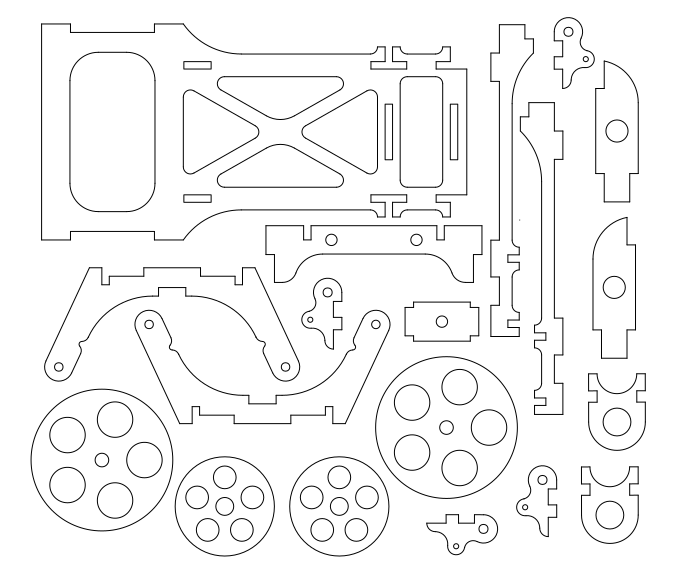
A laser cut acrylic frame, with axles and pivots machined from aluminum on a lathe. The pivots and front axle ran on Teflon bushings, with standard skate bearings. It weighed 129 grams.
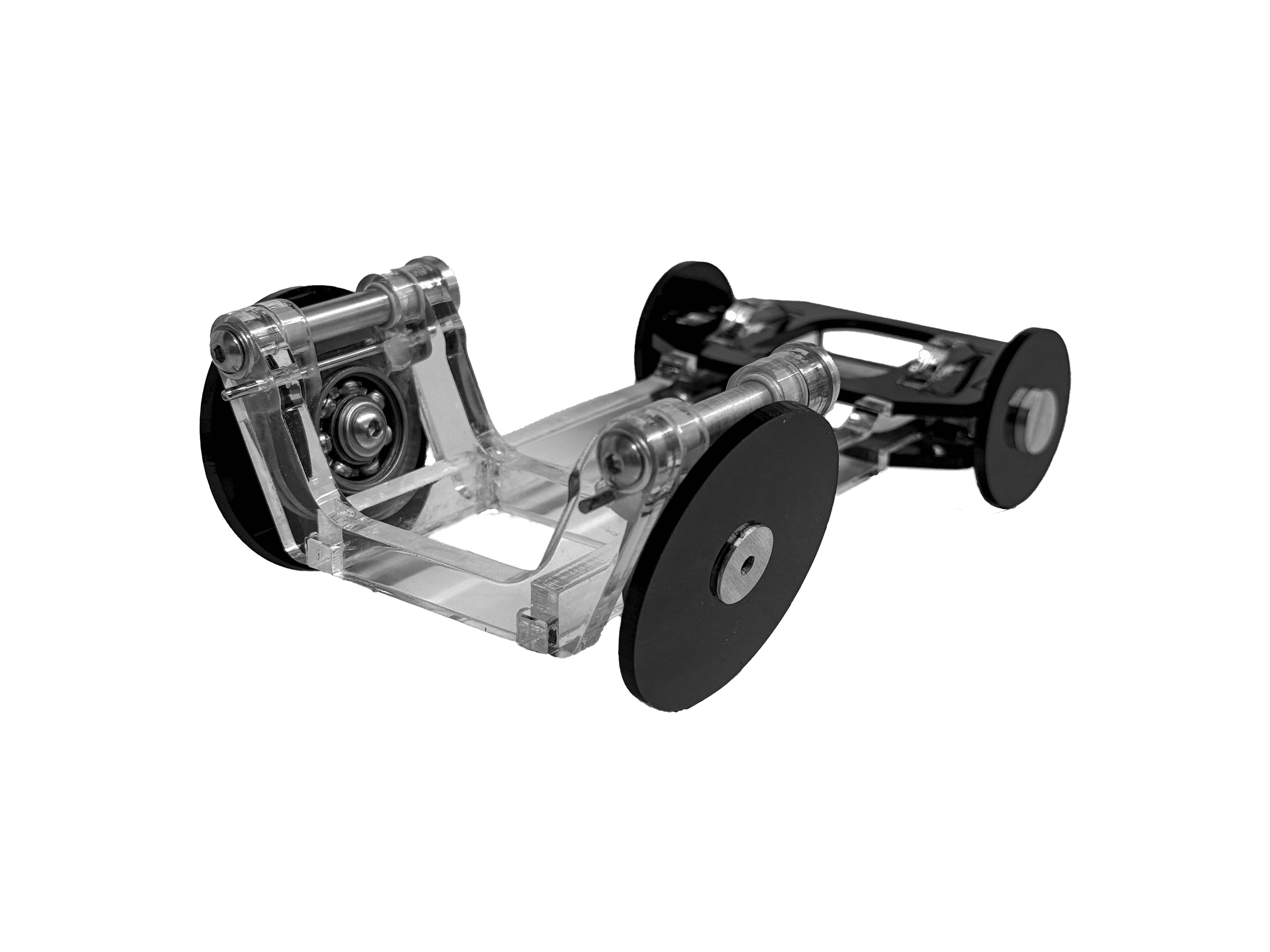
The car was brittle, and the pivots didn't line up.
Using thick acrylic created fitment issues due to the natural taper of laser-cut parts, where the laser’s focal point produces angled edges rather than perfectly perpendicular cuts. This made precise slotted connections difficult to achieve. Additionally, the heat generated during cutting induced cracking in the acrylic, which propagated during testing.
Version 2
Dropped a dozen times, and it was fine. The frame was redesigned around 1/8" acrylic, which reduced stress from cutting and improved part accuracy.
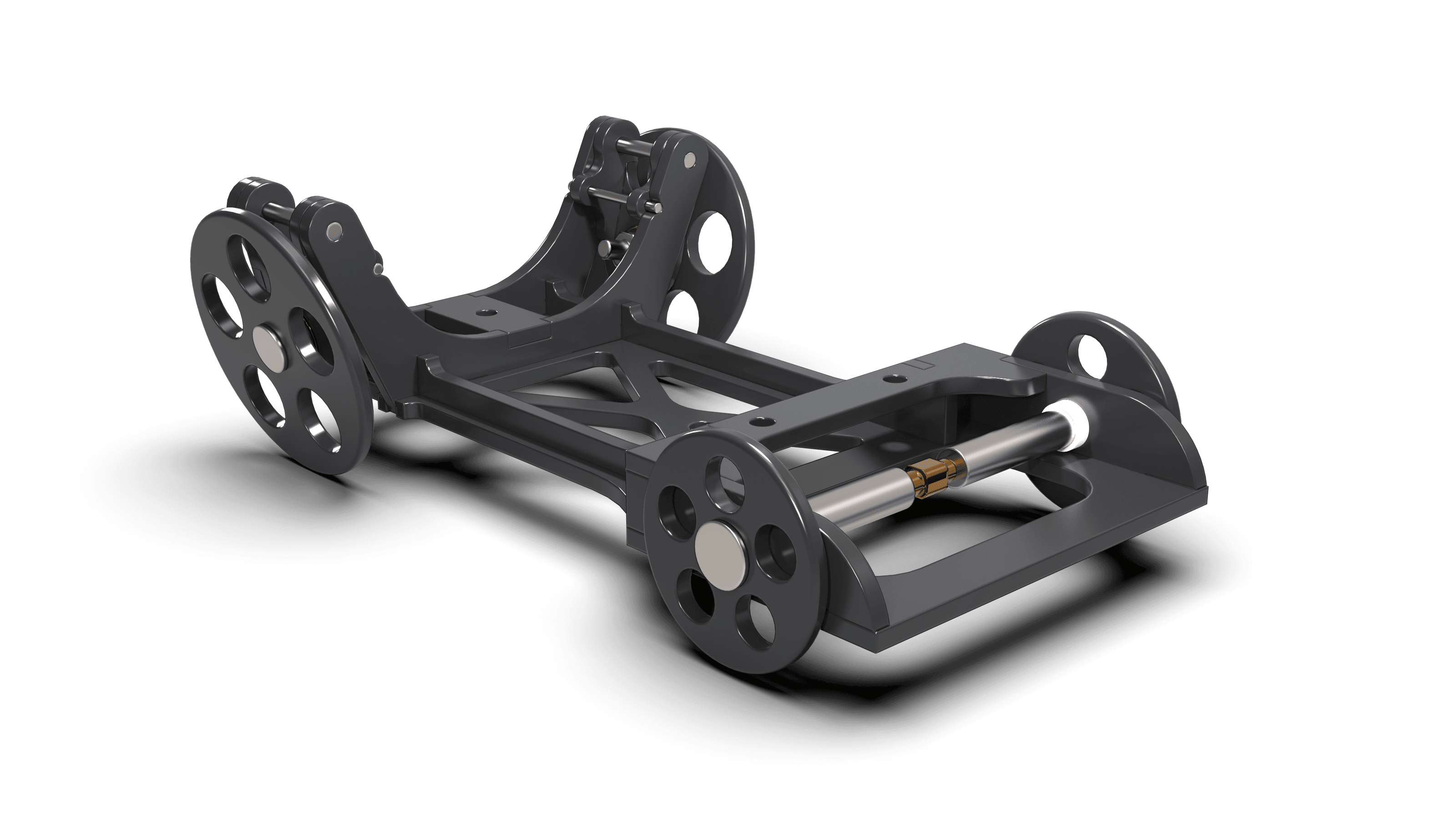
A smaller steel rod now pivots directly in the laser cut acrylic, replacing the bushings and aluminum pins. Smaller bearings and off the shelf shoulder bolts followed, and shrinking the hubs made room for extra bracing without adding weight.
Vacuum formed shell
Testing on a fully printed buck showed layer lines in the shell, so I resin printed the surface. The final body is red PETG, trimmed using a printed jig.
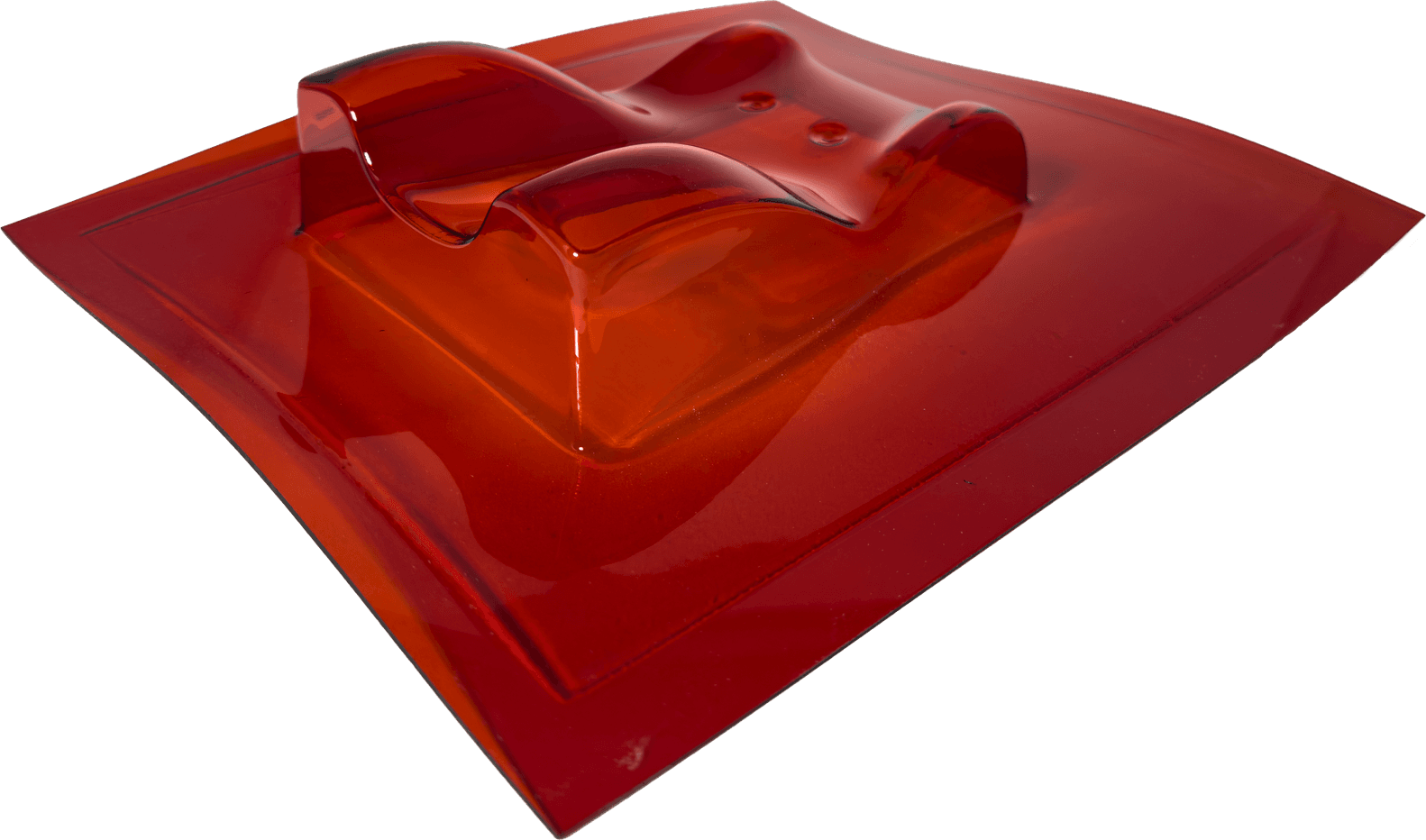
Formed, not yet trimmed
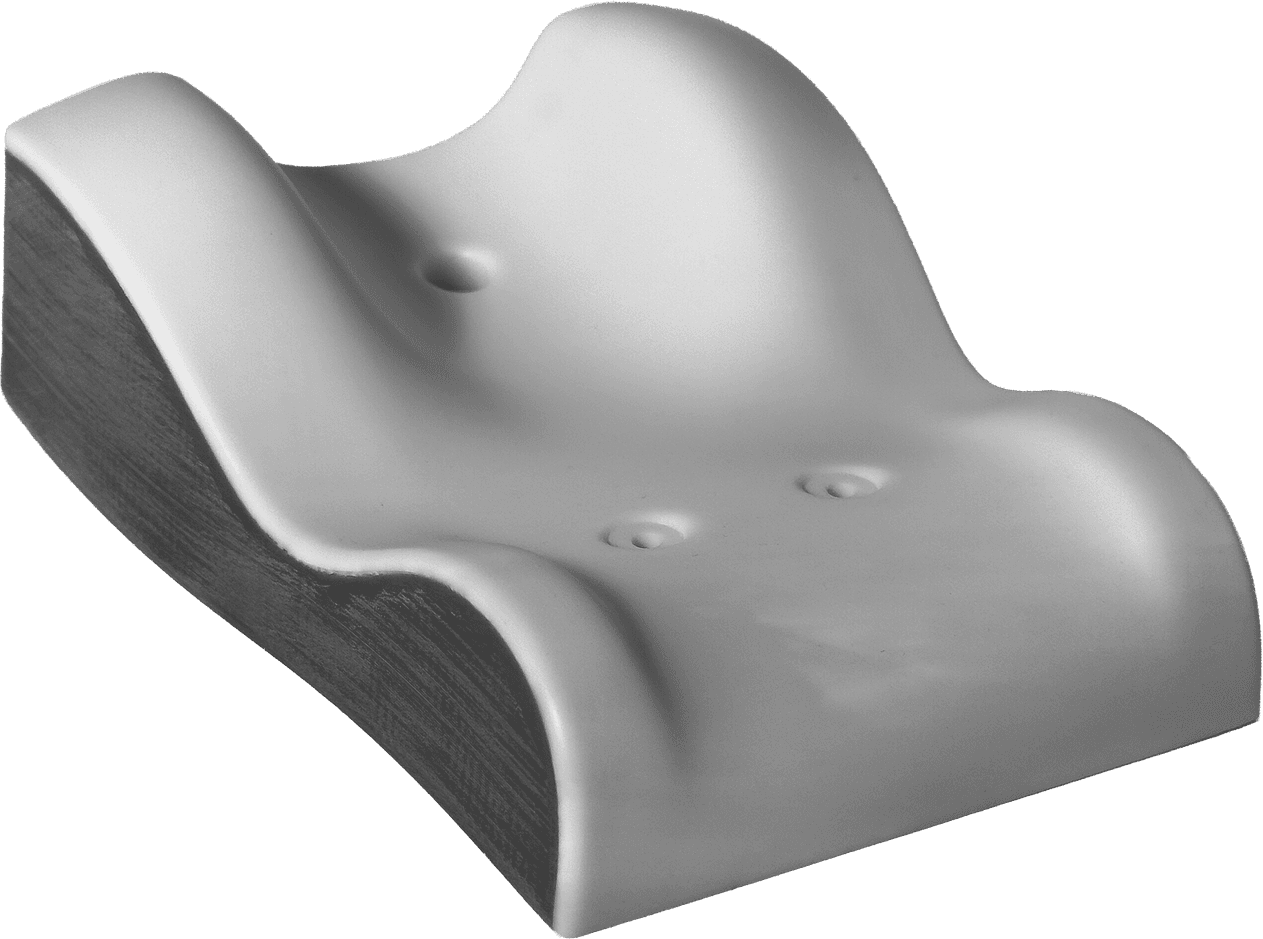
Hybrid resin and FDM printed buck
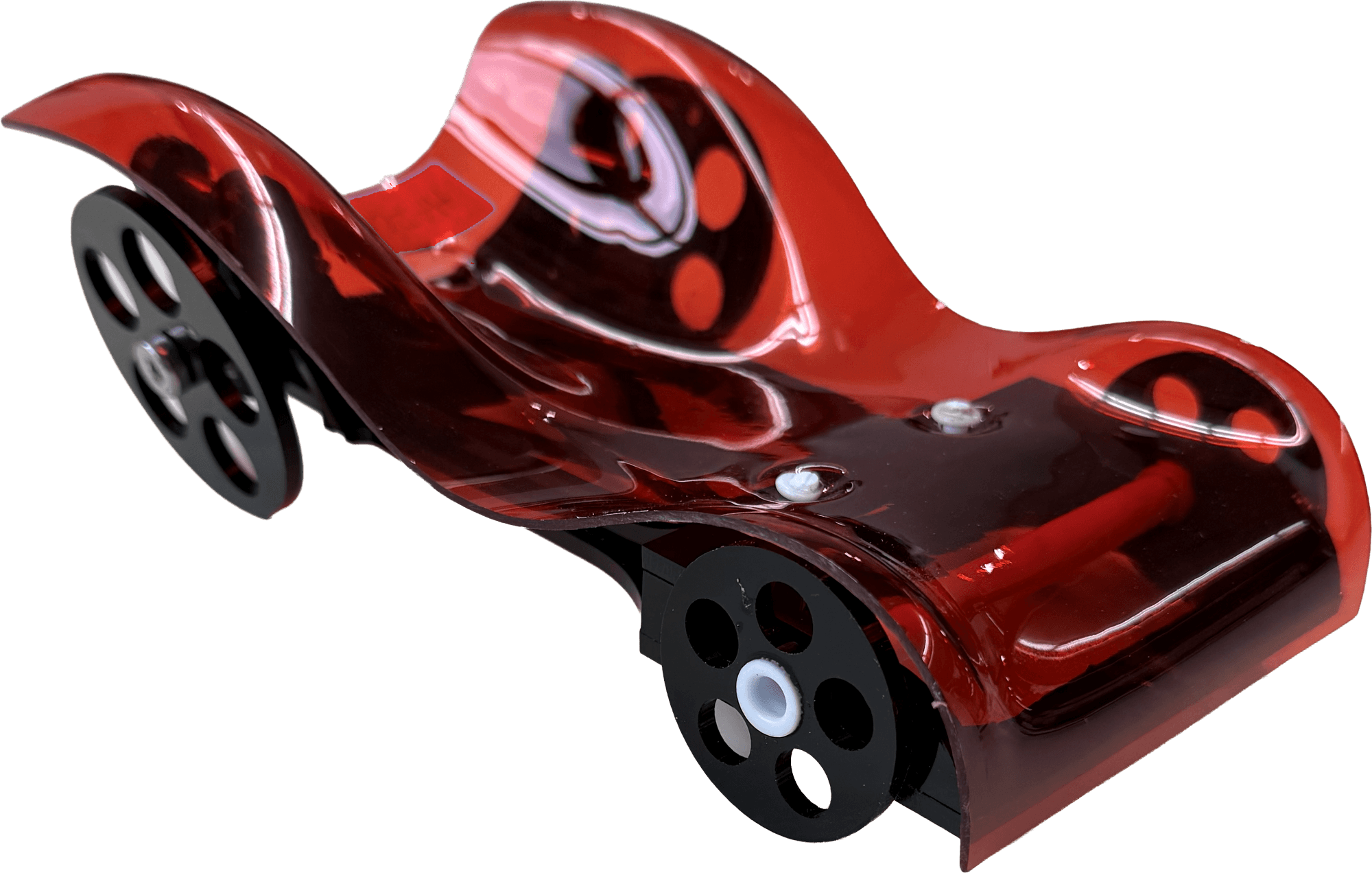
Last second modifications
I was 11 or 12 grams off the sub 100 g category, so the aluminum front axle became a styrene tube on the same Teflon bushings. The M4 hardware used to secure the shell was replaced with makeshift styrene rivets.
Final model
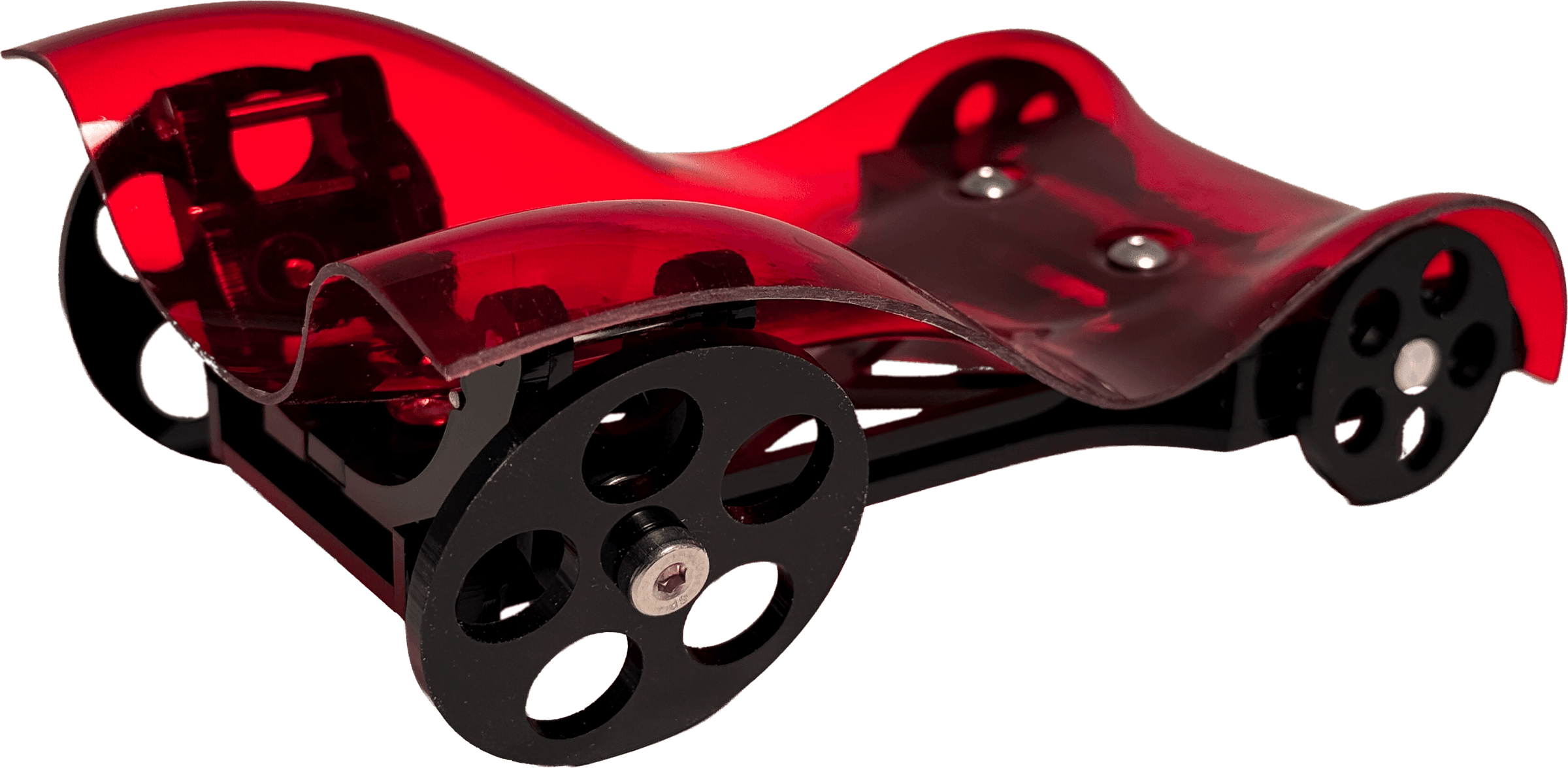
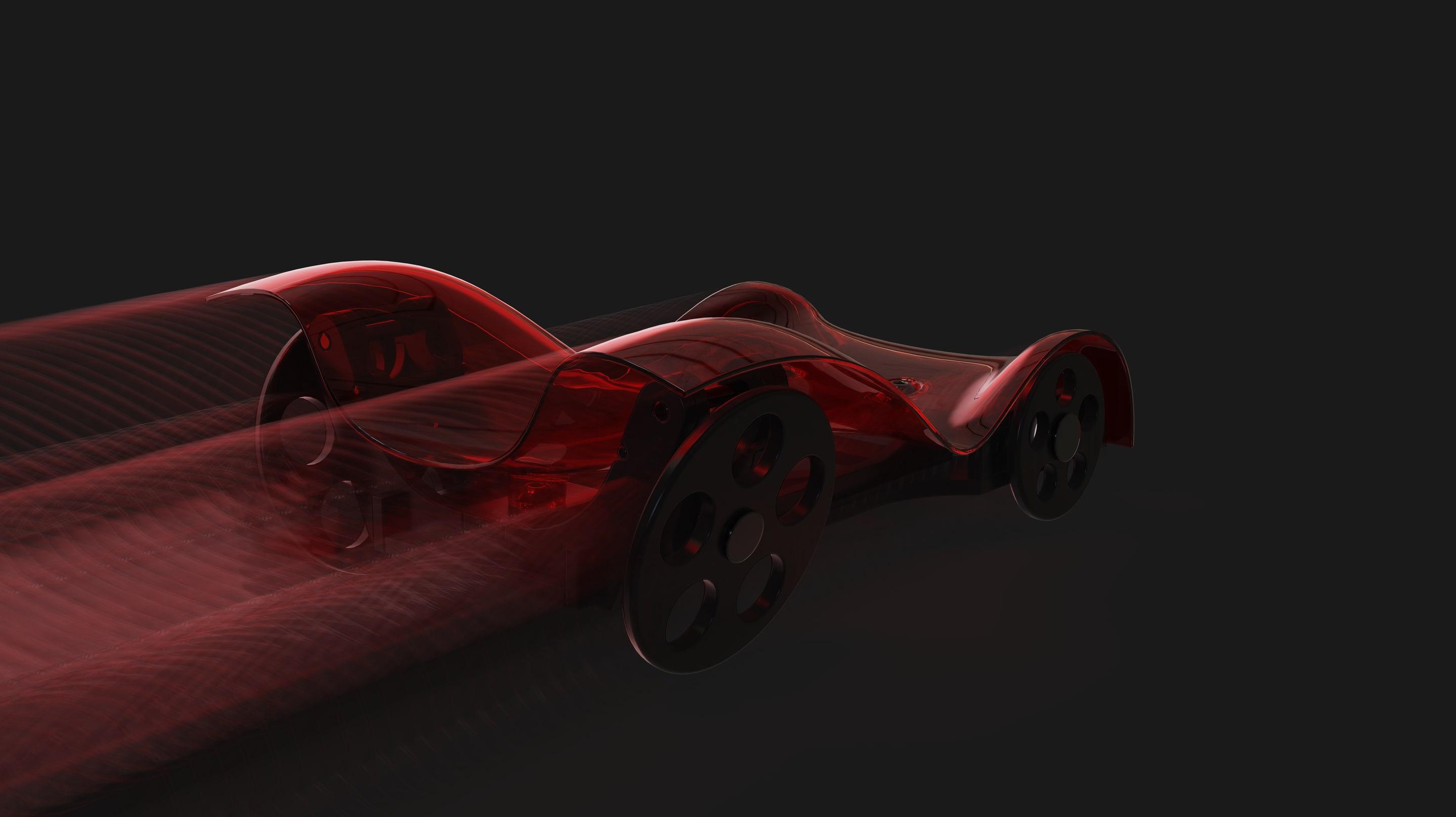
Around 20 cars, four tracks, one final race between four.
Each car was timed by professors with stopwatches, and a certain number advanced after each round.
- 2nd
- place
- 97 g
- final weight