SIPHON
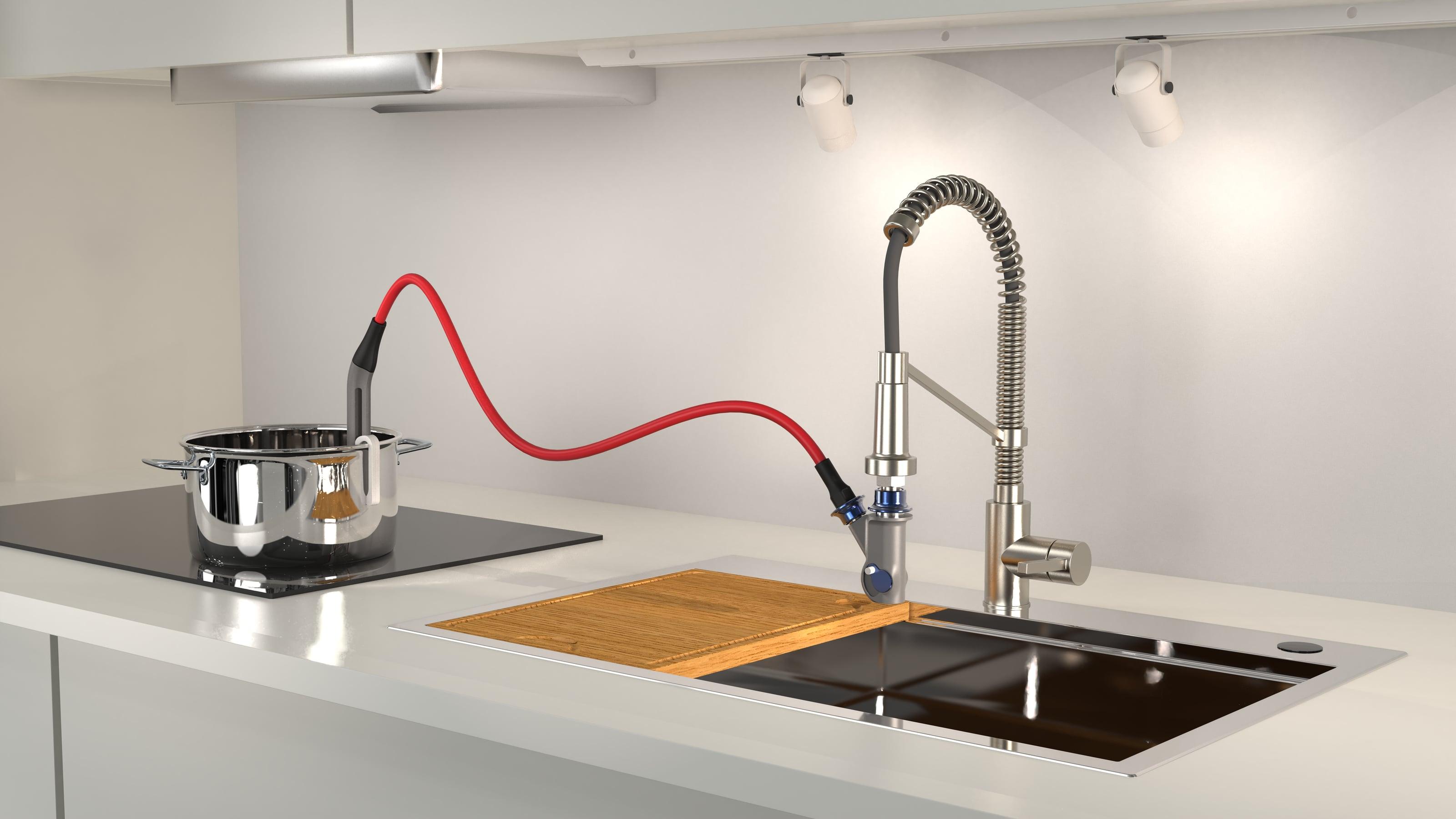
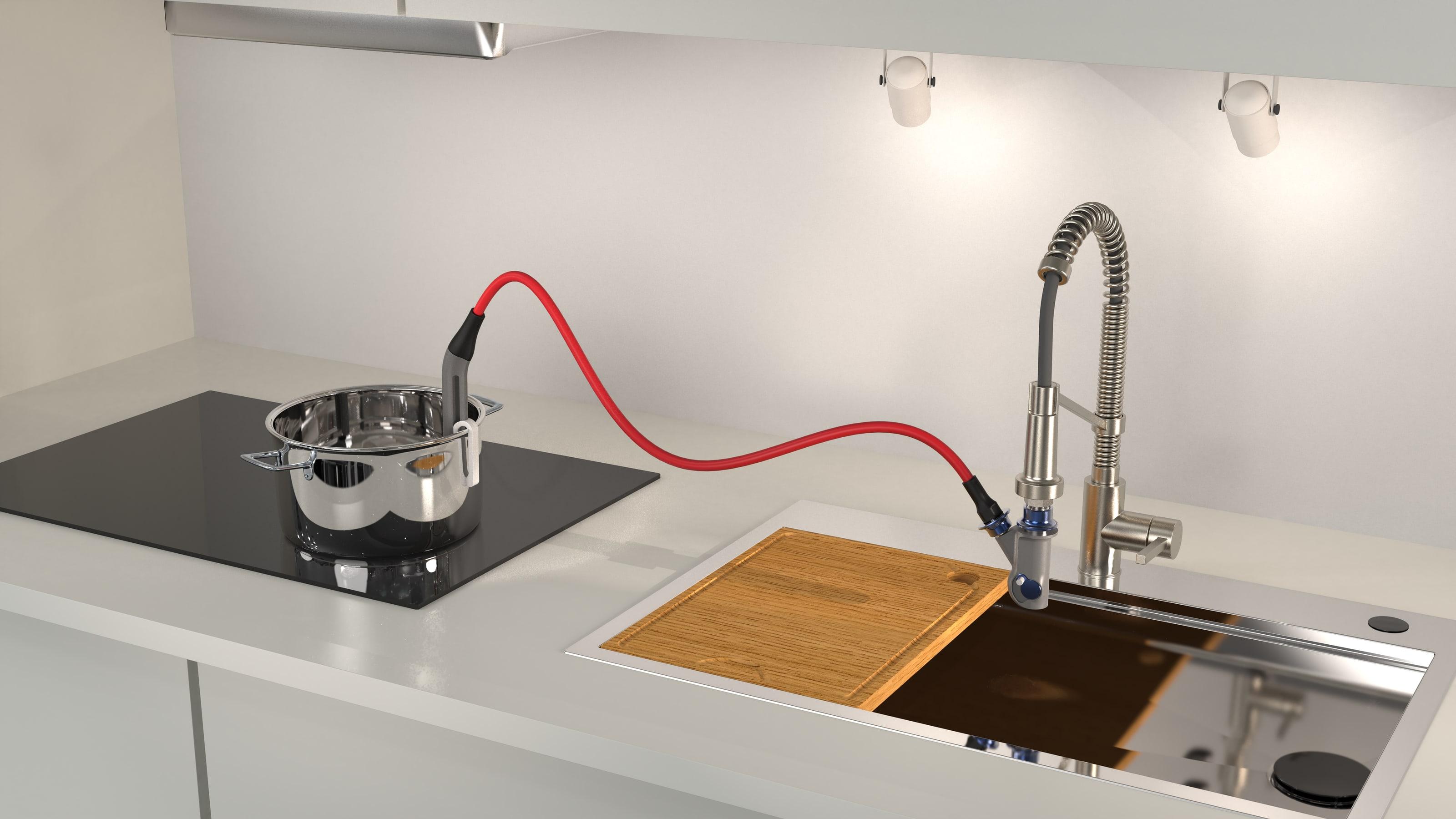
A system that fills and drains a pot without ever having to lift or tilt it.
2026
Overview
How can cooking with boiling water be made safer for someone with one arm?
A user centered design project focused on transhumeral amputees.
Most of cooking one handed became manageable with practice. The pot did not.
I simulated making spaghetti and sauce with one hand. Handling a hot, heavy, imbalanced pot of boiling water remained one of the most difficult and dangerous tasks.
Operable with one hand
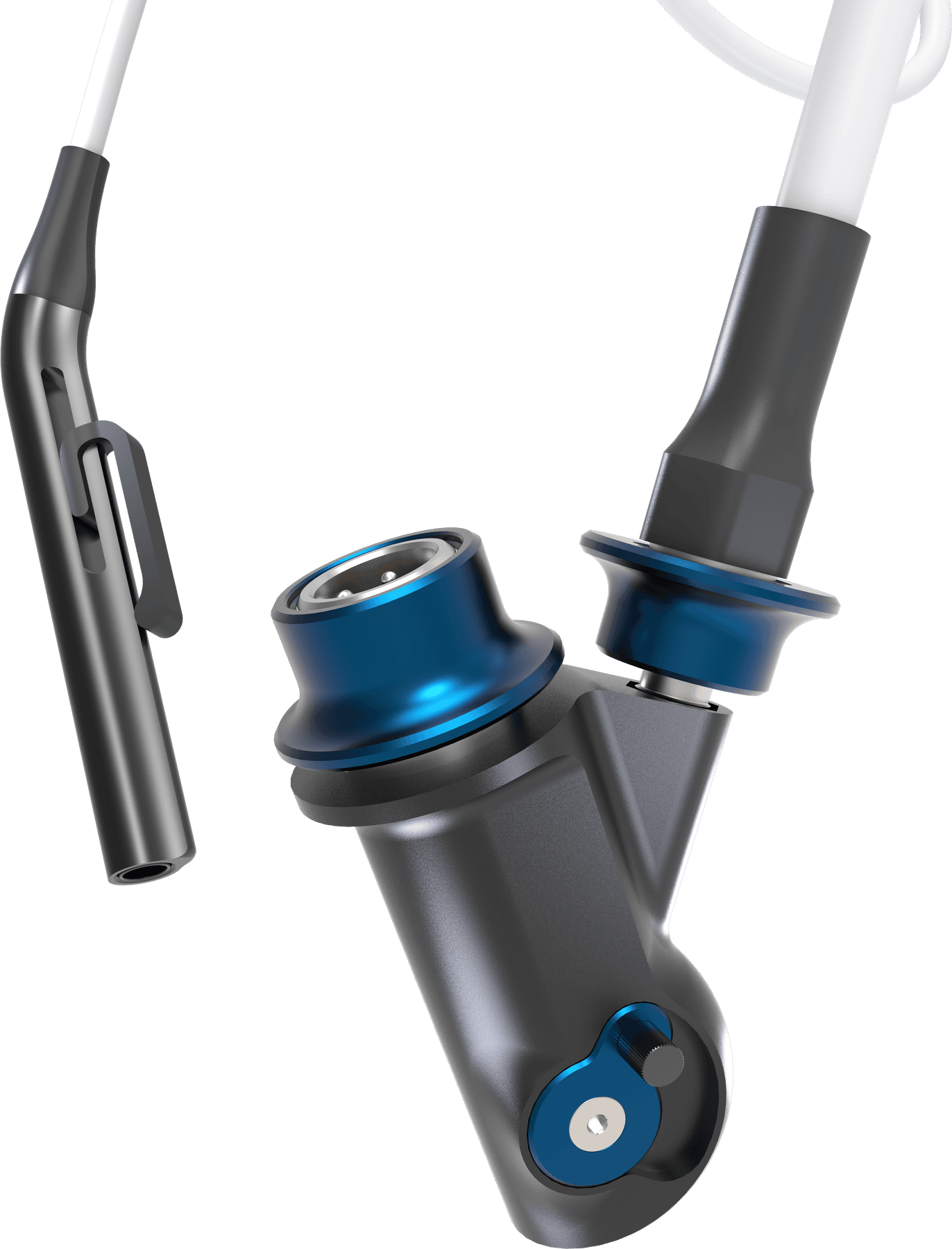
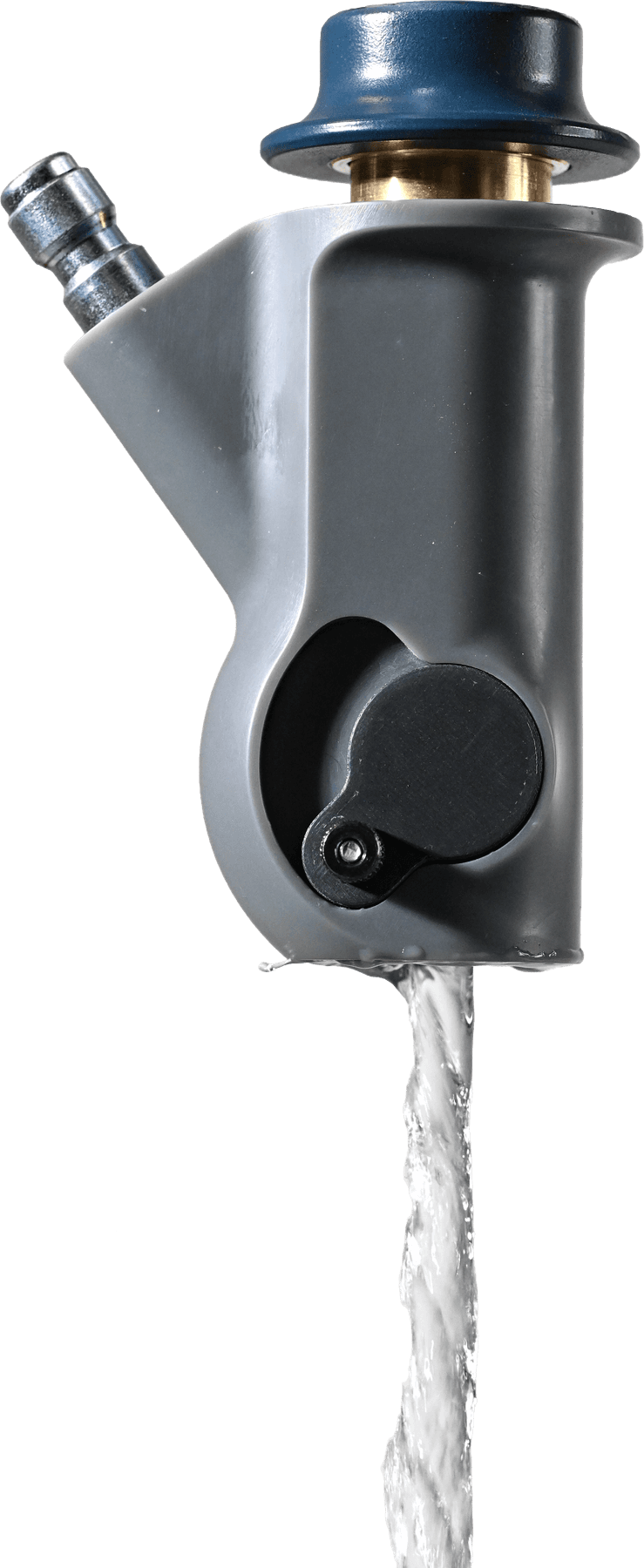
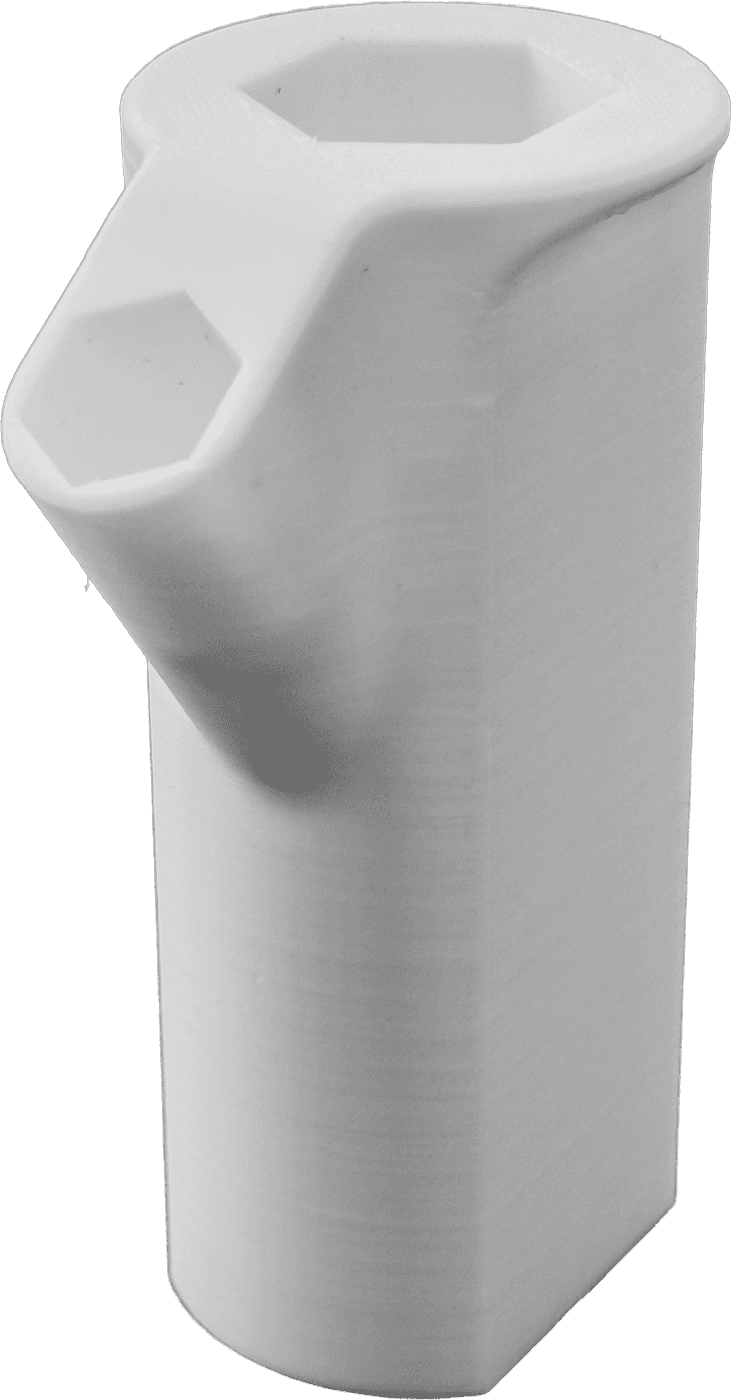
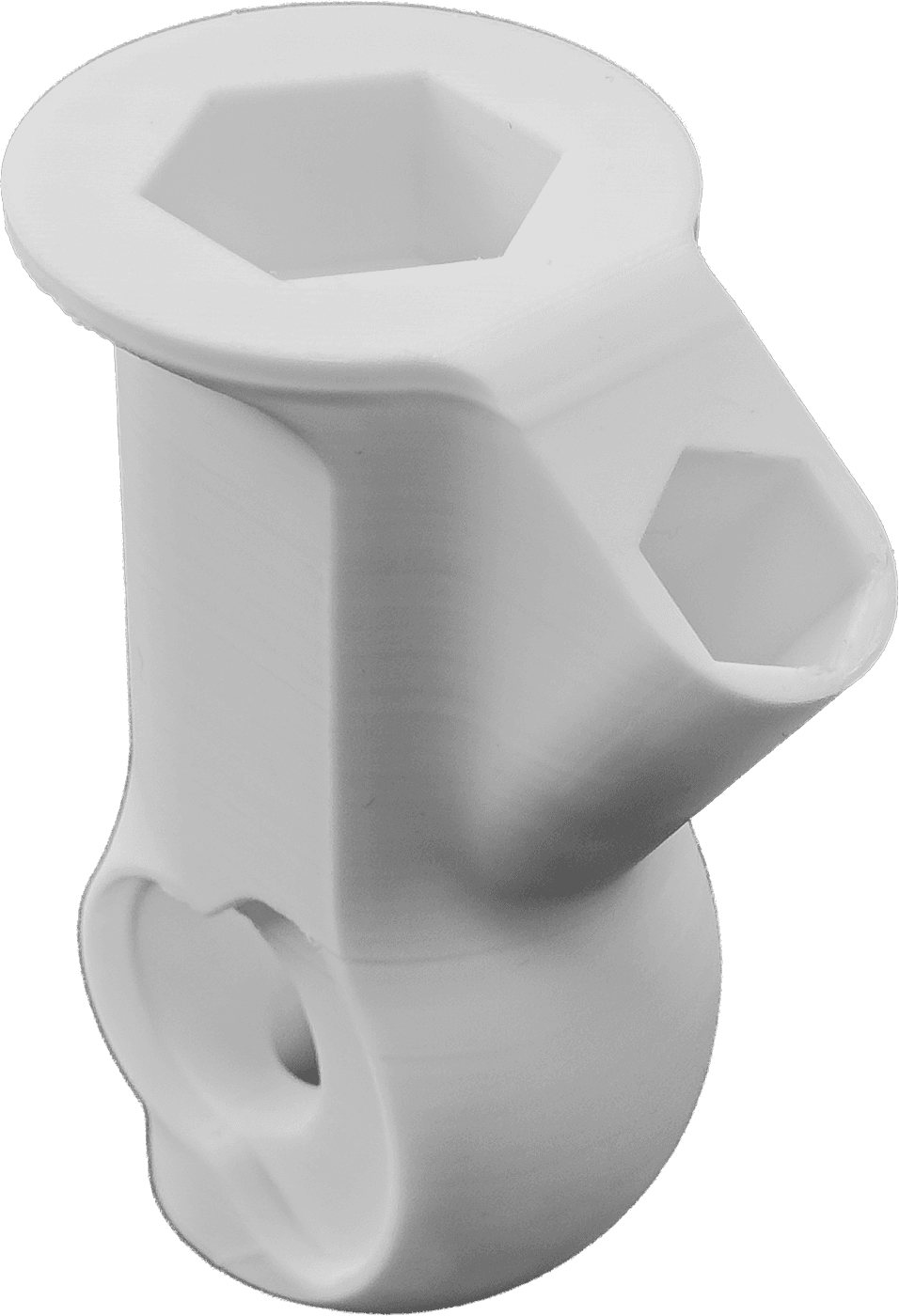
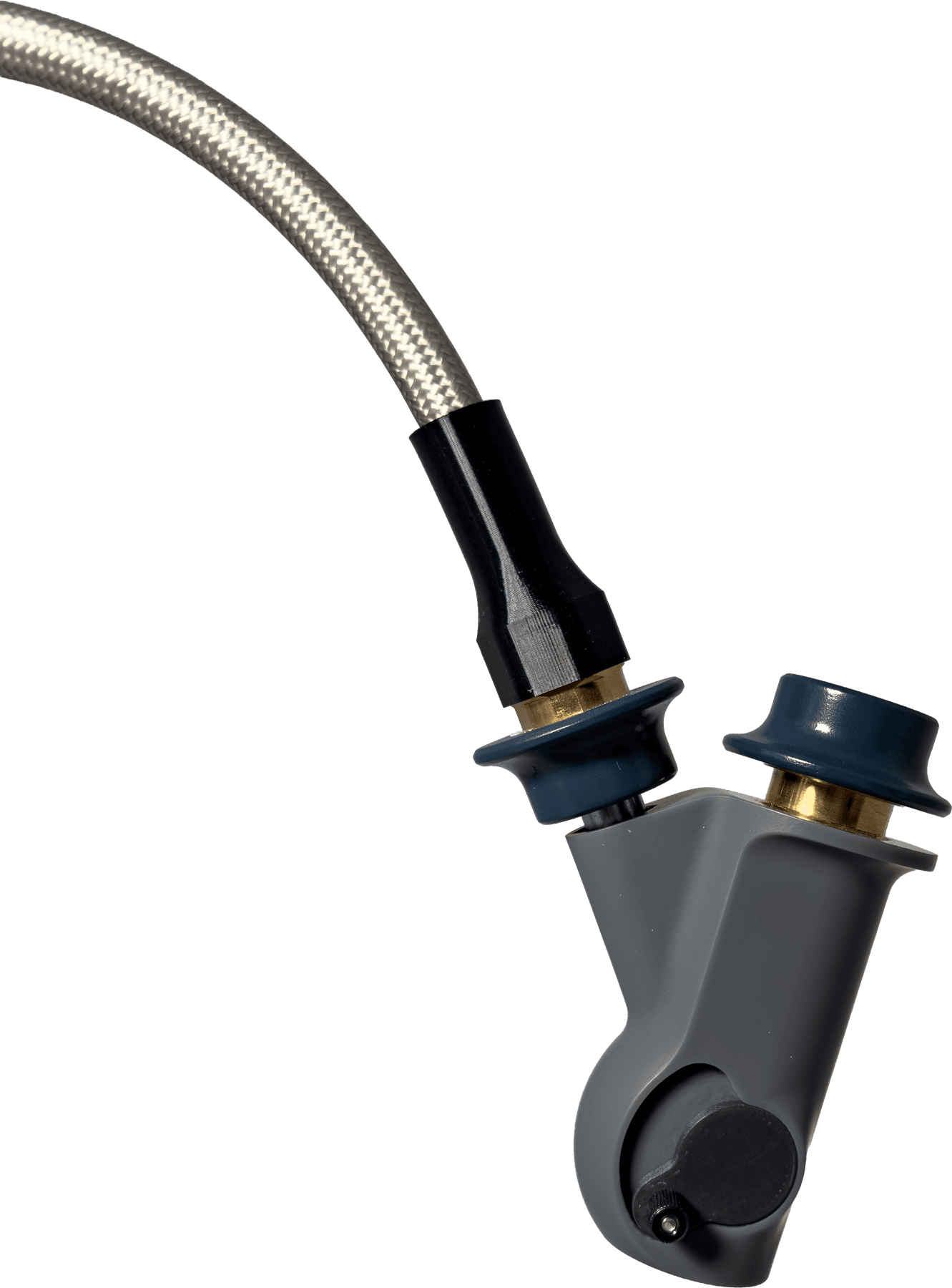
A quick-release valve attaches to a variety of sinks through interchangeable adapters. It has levers on both sides, and opposing flanges make the connections easier to work with a single hand.
Physics, not pumps
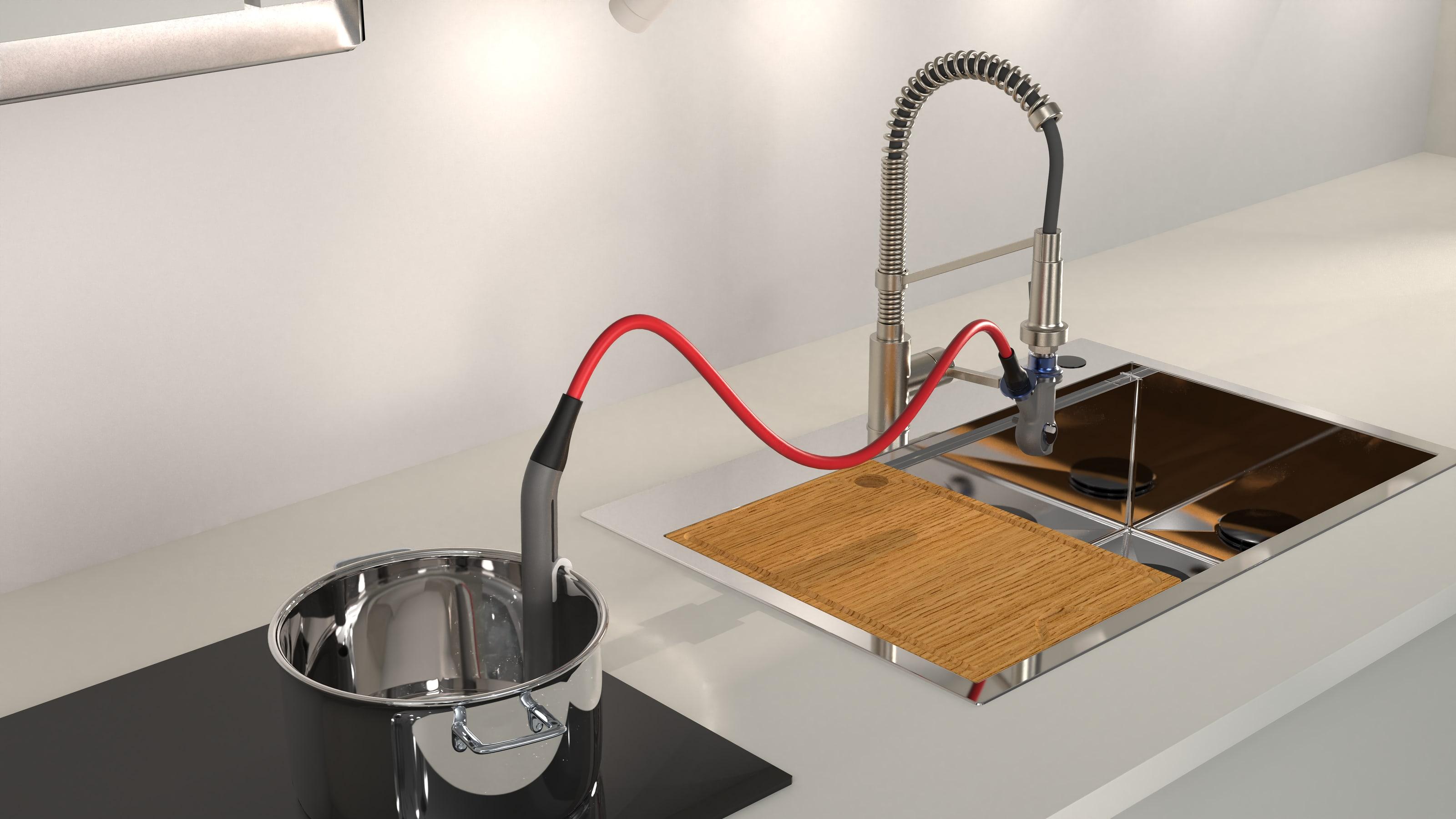
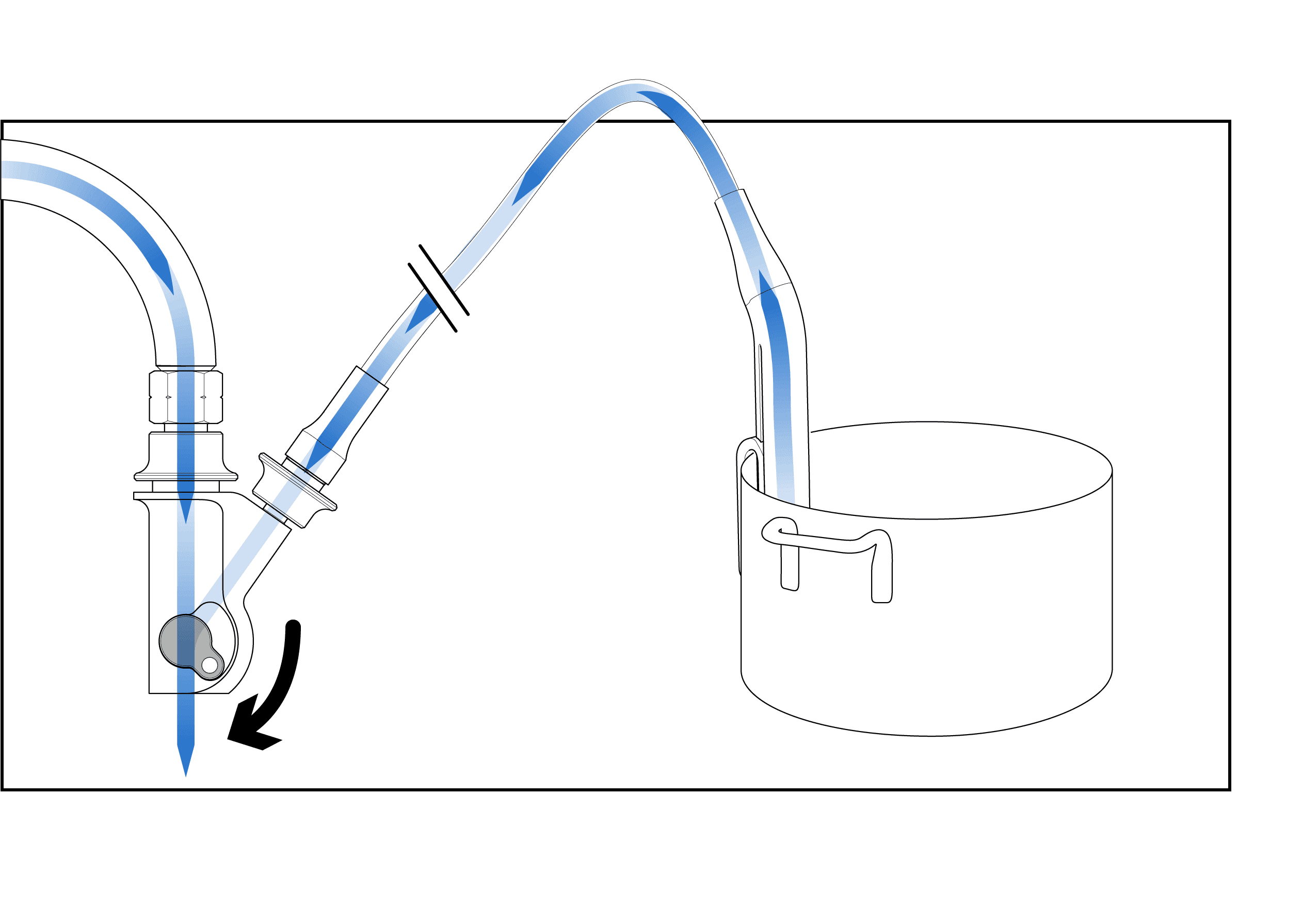
Open the valve and turn on the faucet, and a low pressure zone draws the water back through the hose into the sink. Once the siphon starts, no further interaction is required. With no pumps or electronics, it stays simple and less expensive to make, which matters for accessible products.
My assignment
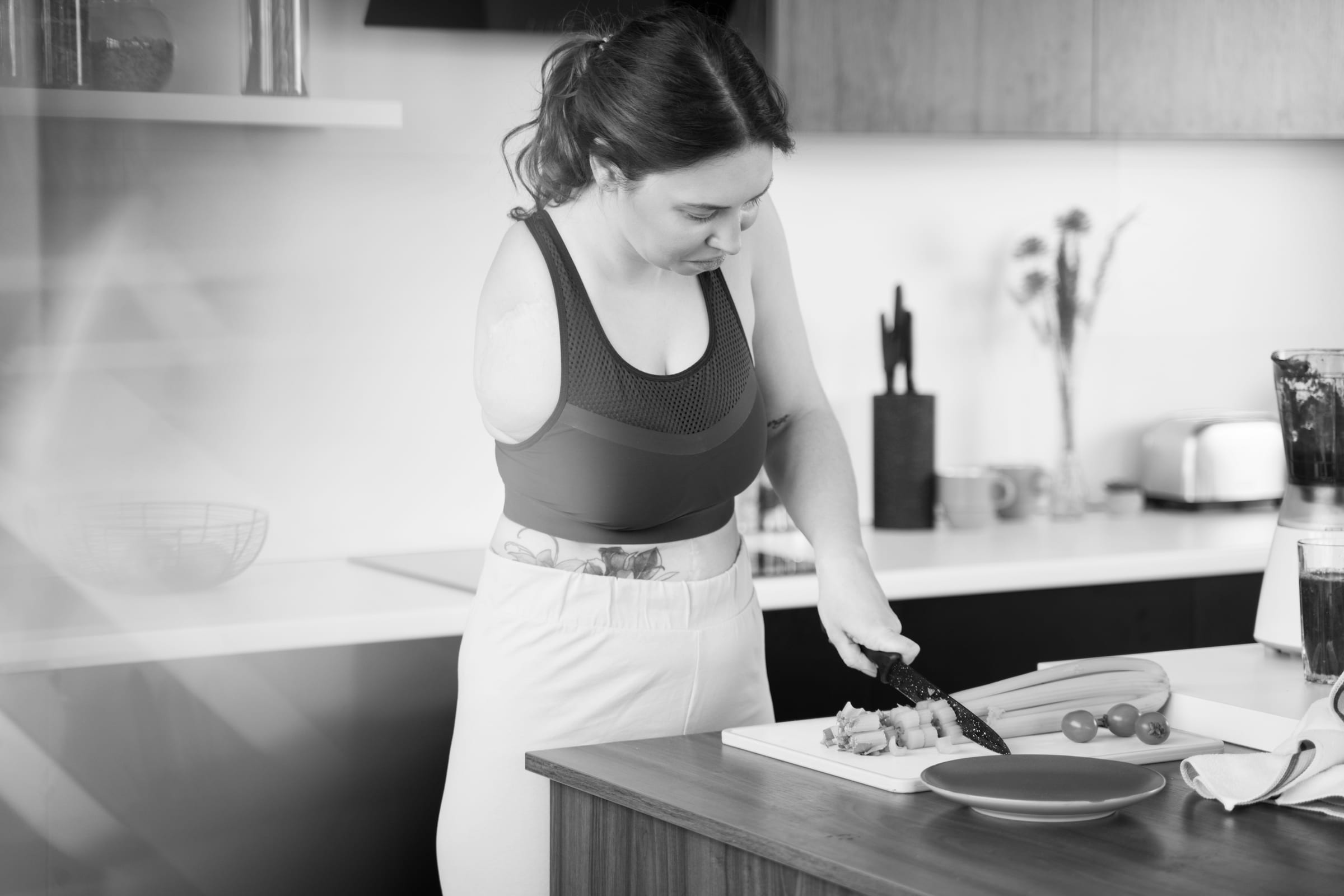
As part of a user centered design project for my Studio 4 class, I was tasked with designing a device to assist a transhumeral (above the elbow) amputee making spaghetti and sauce.
1 in 62
Americans experience limb loss or limb difference.
Each year, more than 500,000 Americans experience limb loss or are born with a limb difference. About 465,000 of those cases are due to amputations.
The cost of prosthetic devices can range from $5,000 to over $50,000, depending on complexity.
Task analysis
I simulated making spaghetti and sauce with one hand, one step at a time.
Steps 2, 5 and 8 were the most challenging. Step 5, carrying the pot of boiling water to the strainer, was the hardest and the most dangerous.
Stirring, straining and plating could all be done with relative ease after some practice. Opening packaging and handling the hot pot safely were by far the most difficult parts.
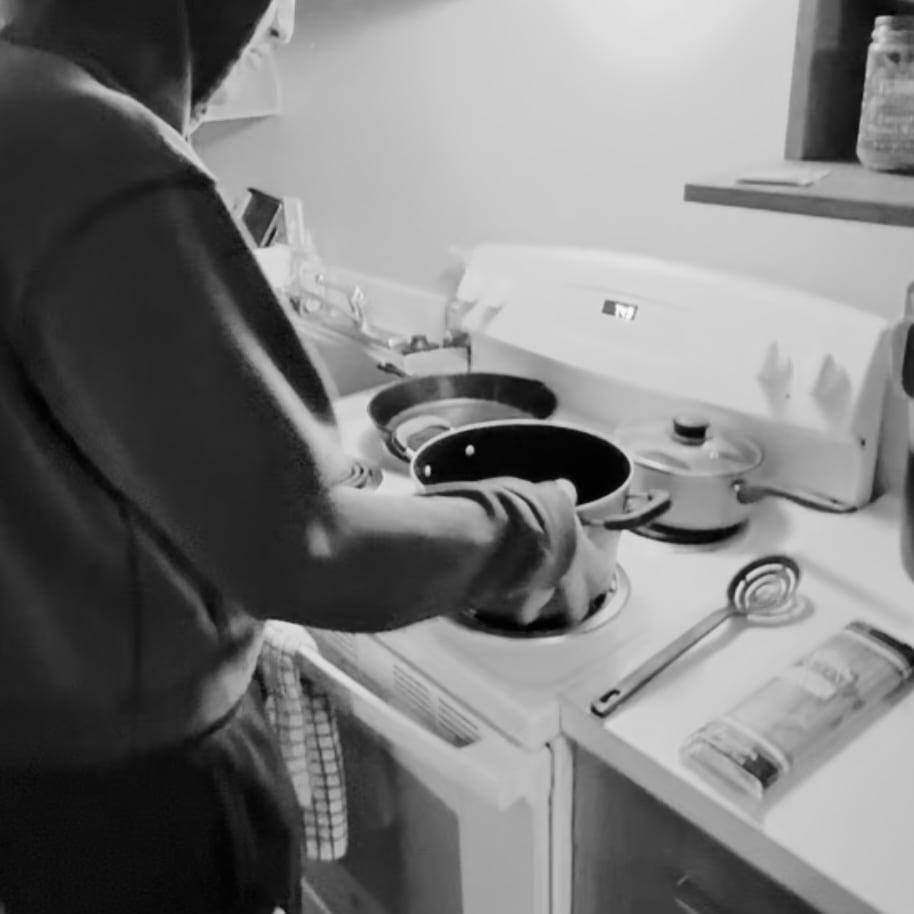
Step 1Filling the pot
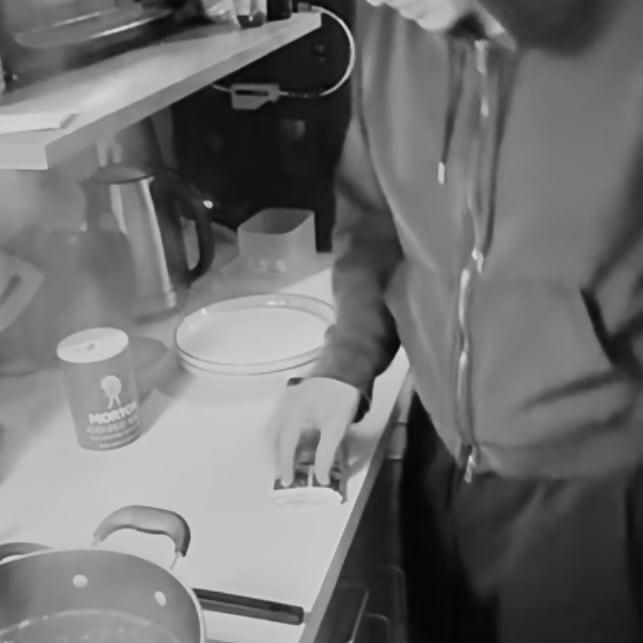
Step 2Opening the spaghetti
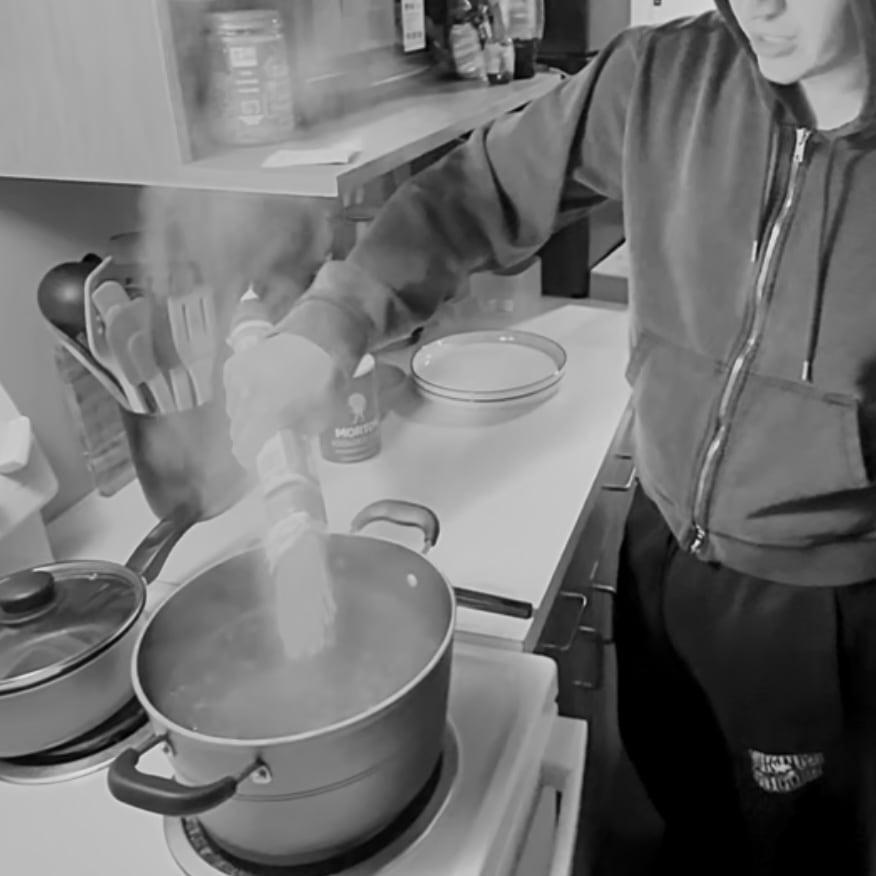
Step 3Pouring the spaghetti in the pot
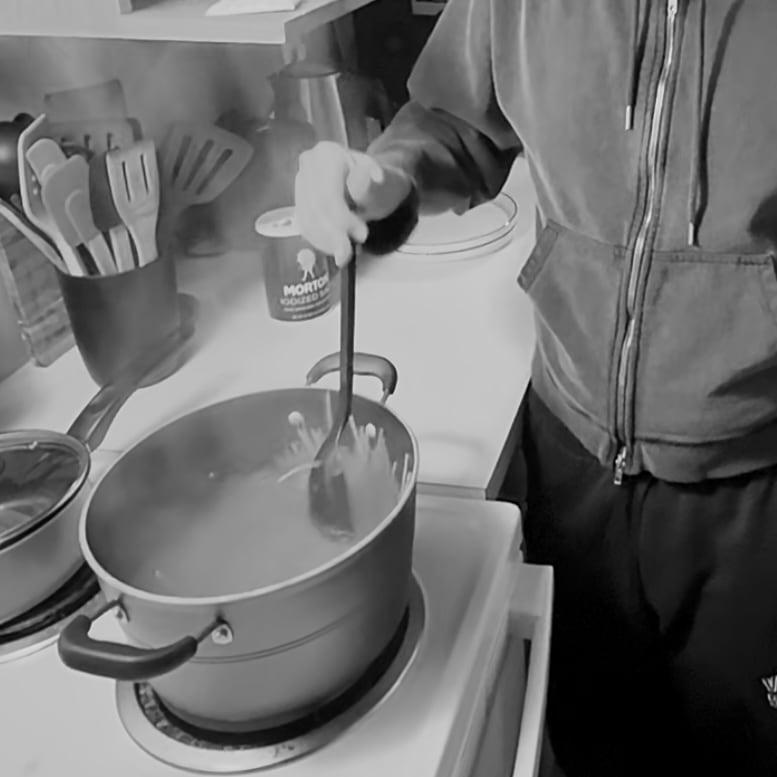
Step 4Stirring the pot
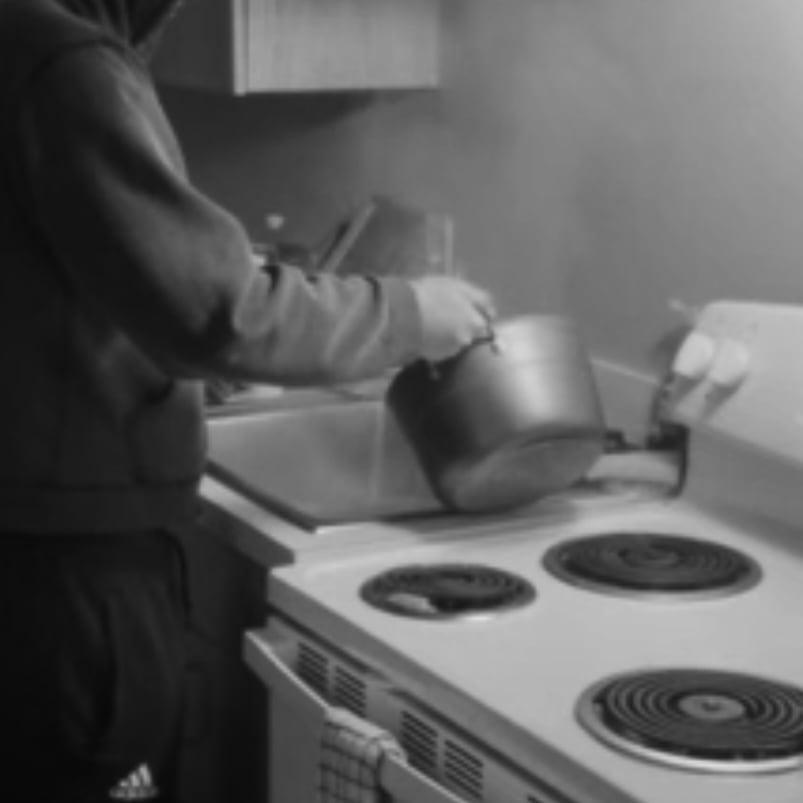
Step 5Pouring pasta into the strainer
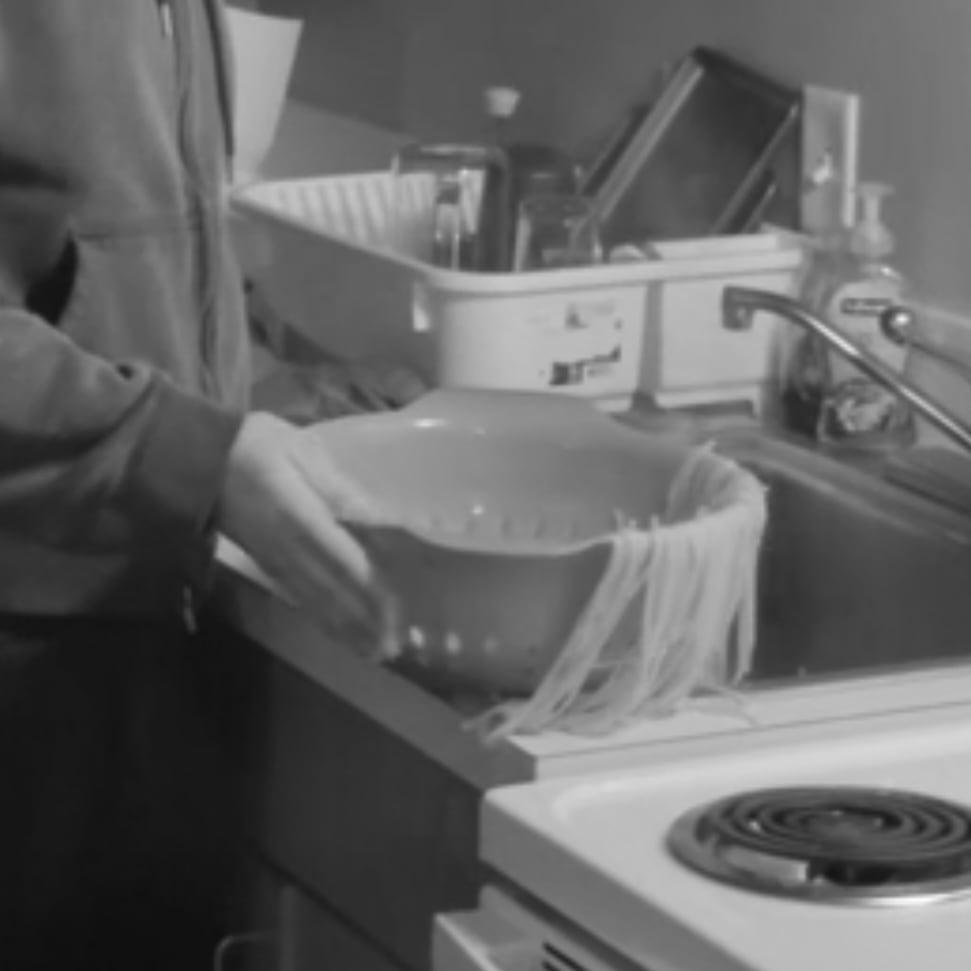
Step 6Picking up the strainer
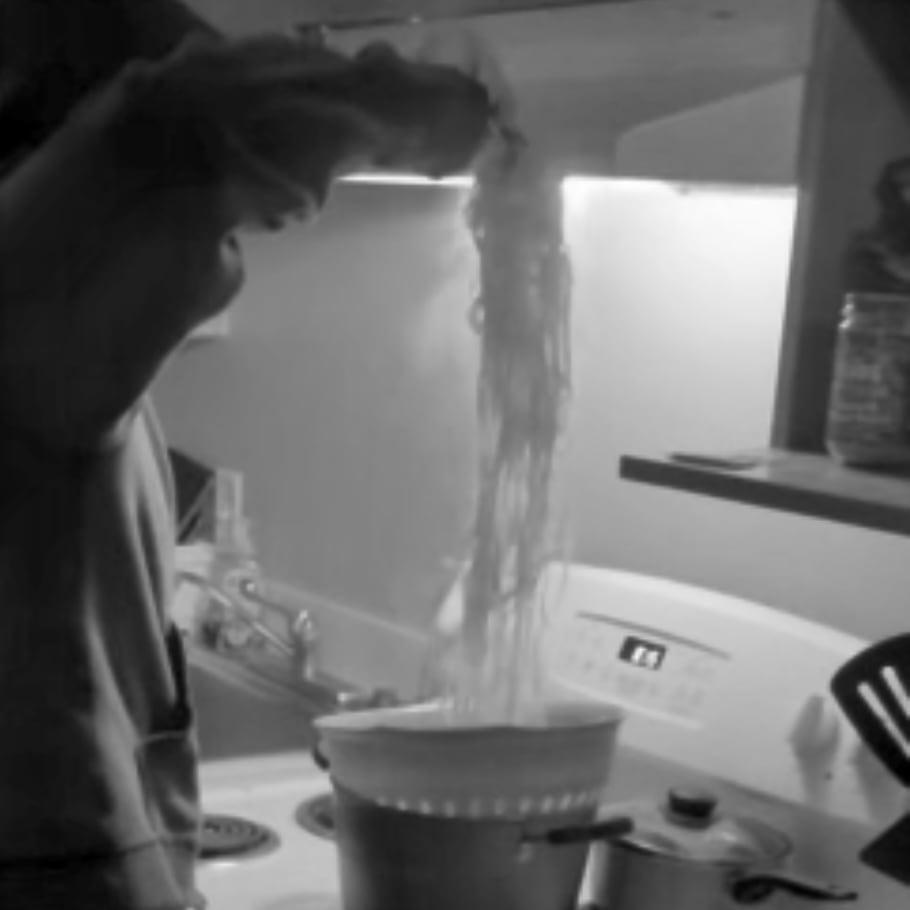
Step 7Plating the spaghetti
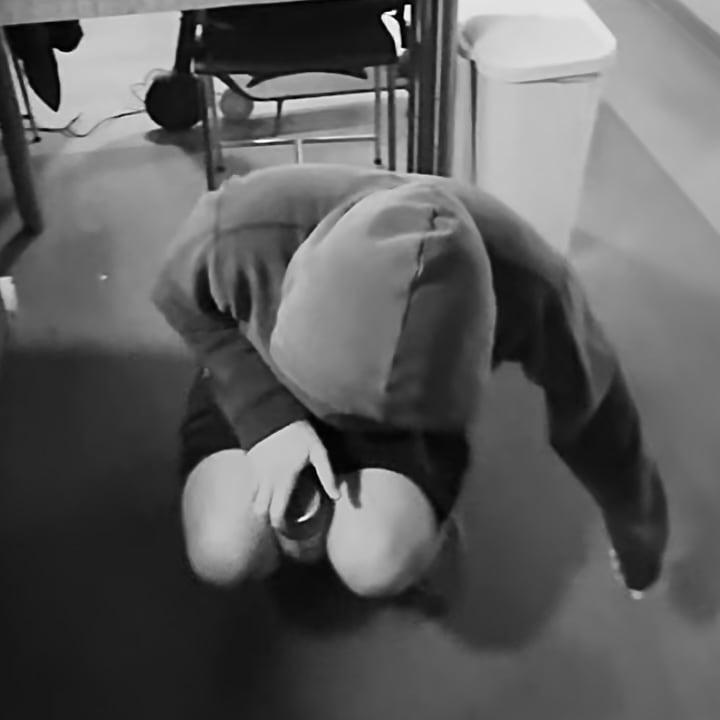
Step 8Opening the sauce
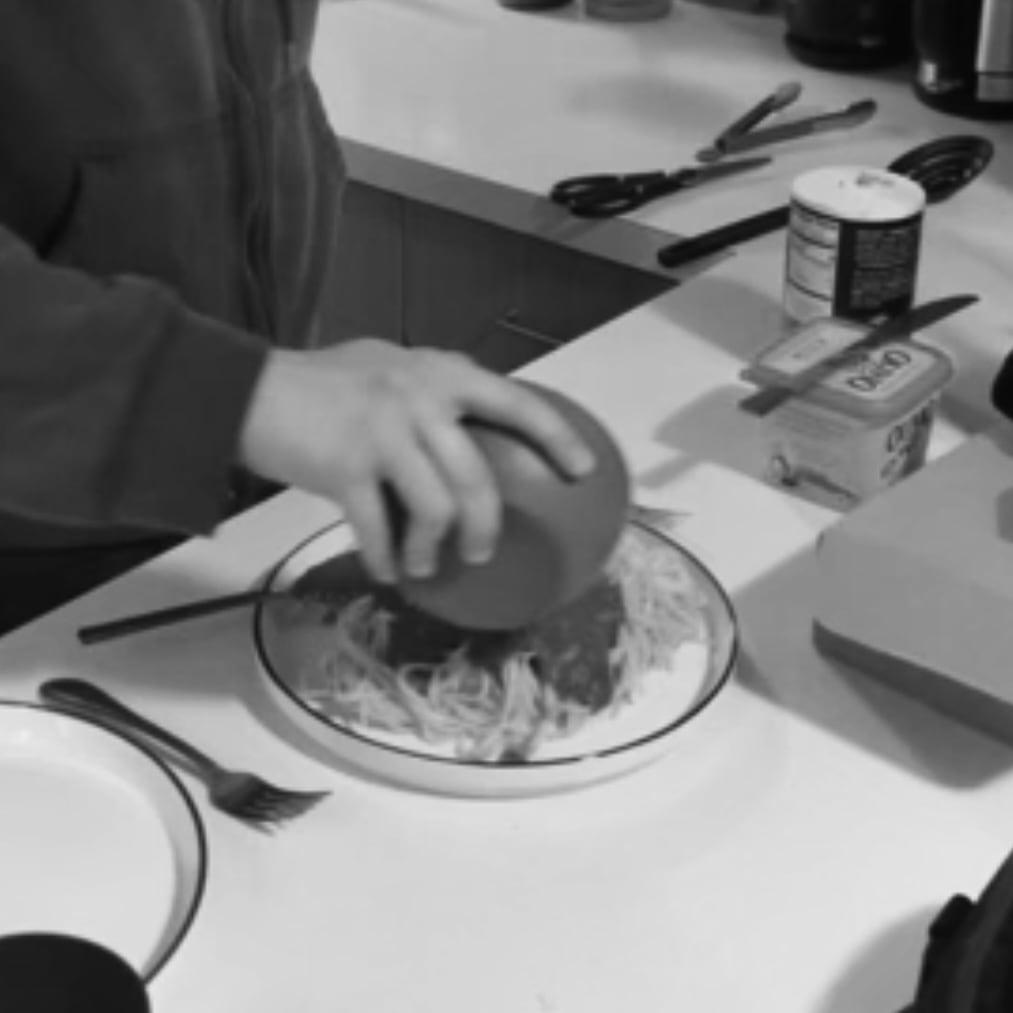
Step 9Pouring the sauce
Ideation
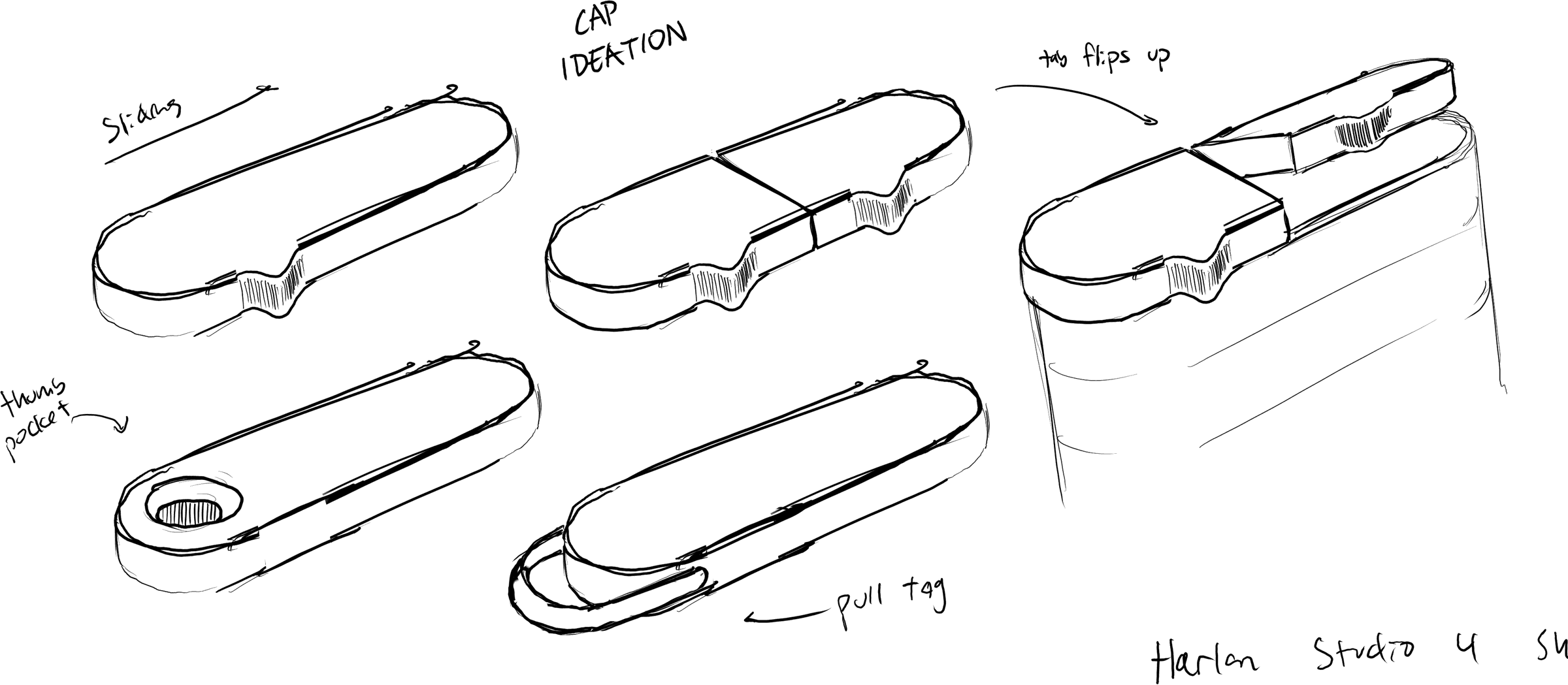
Early ideas included packaging that opens with one hand, and an all in one cooking system that raises and lowers the spaghetti in a basket, like a deep fryer.
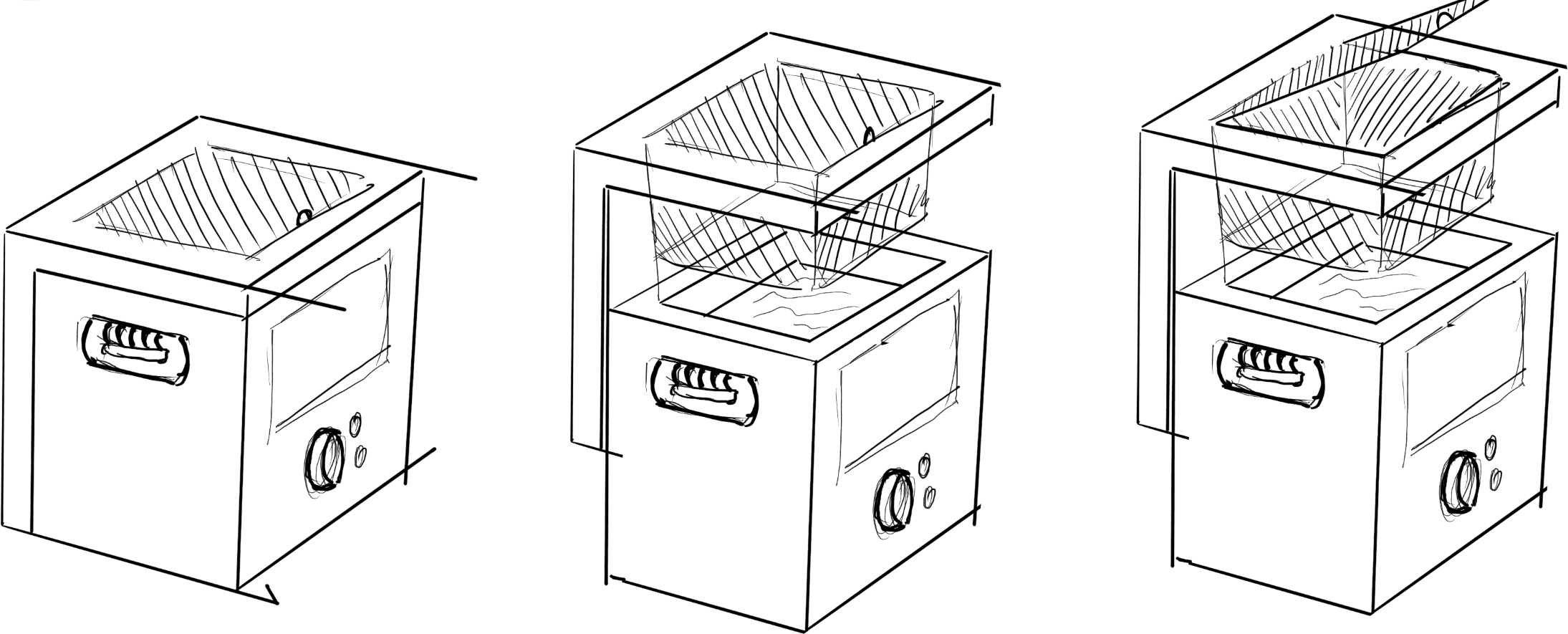
An all in one cooking system with a basket that lifts out of the water.
Caps for spaghetti packaging that opens with one hand.
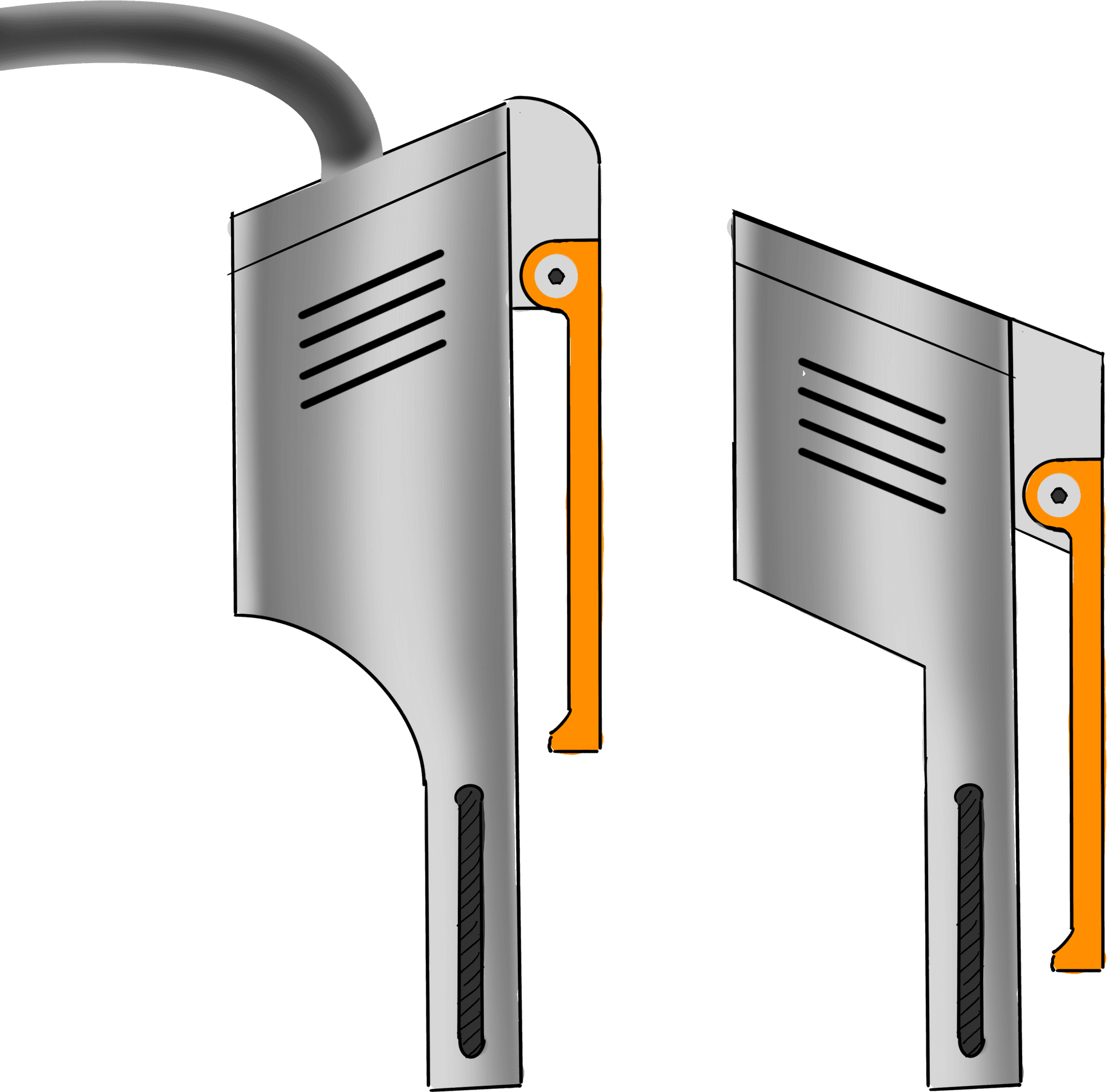
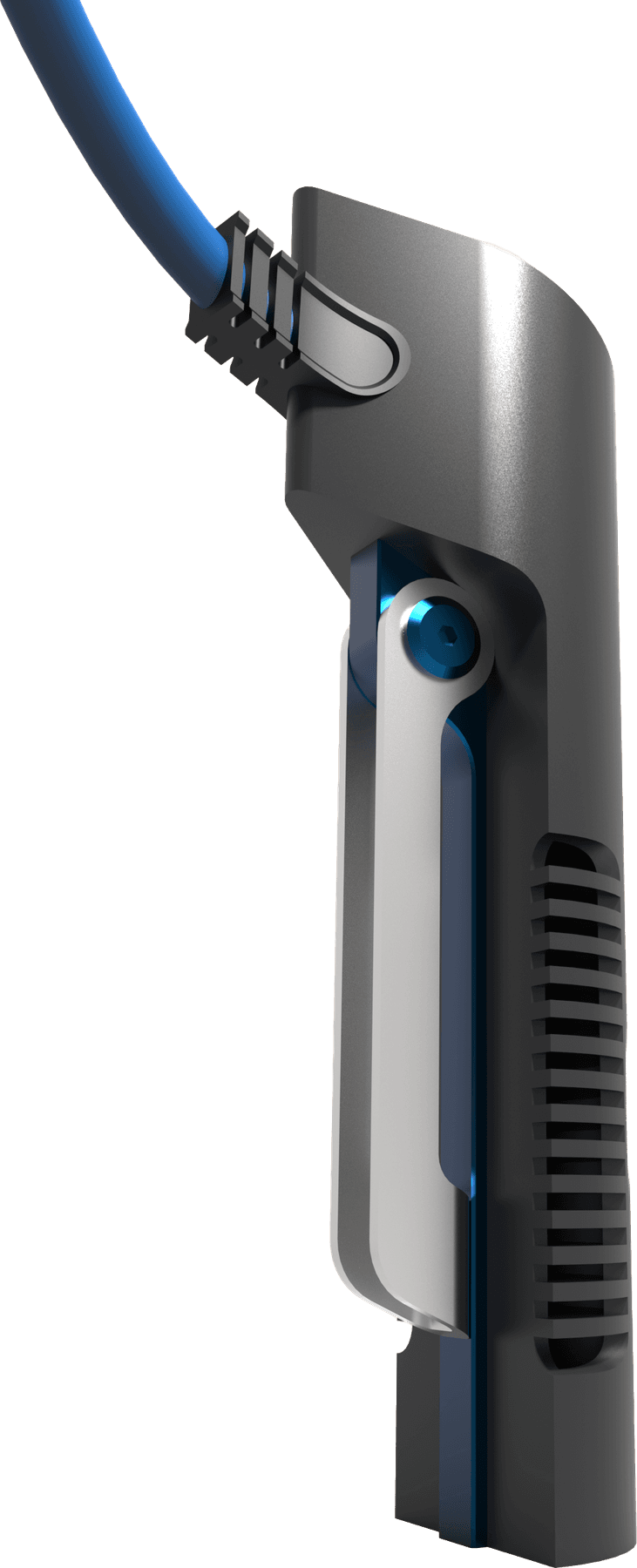
A universal pot filler
I chose a pot filler and drainer over my other ideas because it seemed the safest and most universally useful. It removes the difficult and dangerous step of moving a pot of boiling water, and it can make the kitchen safer for anyone.
A pump, at first
The first concept had a pump built into the part that sits in the pot, a one handed quick release to attach it to the faucet, and a clip that fits a wide range of pot sizes.
Model making
Refining the form
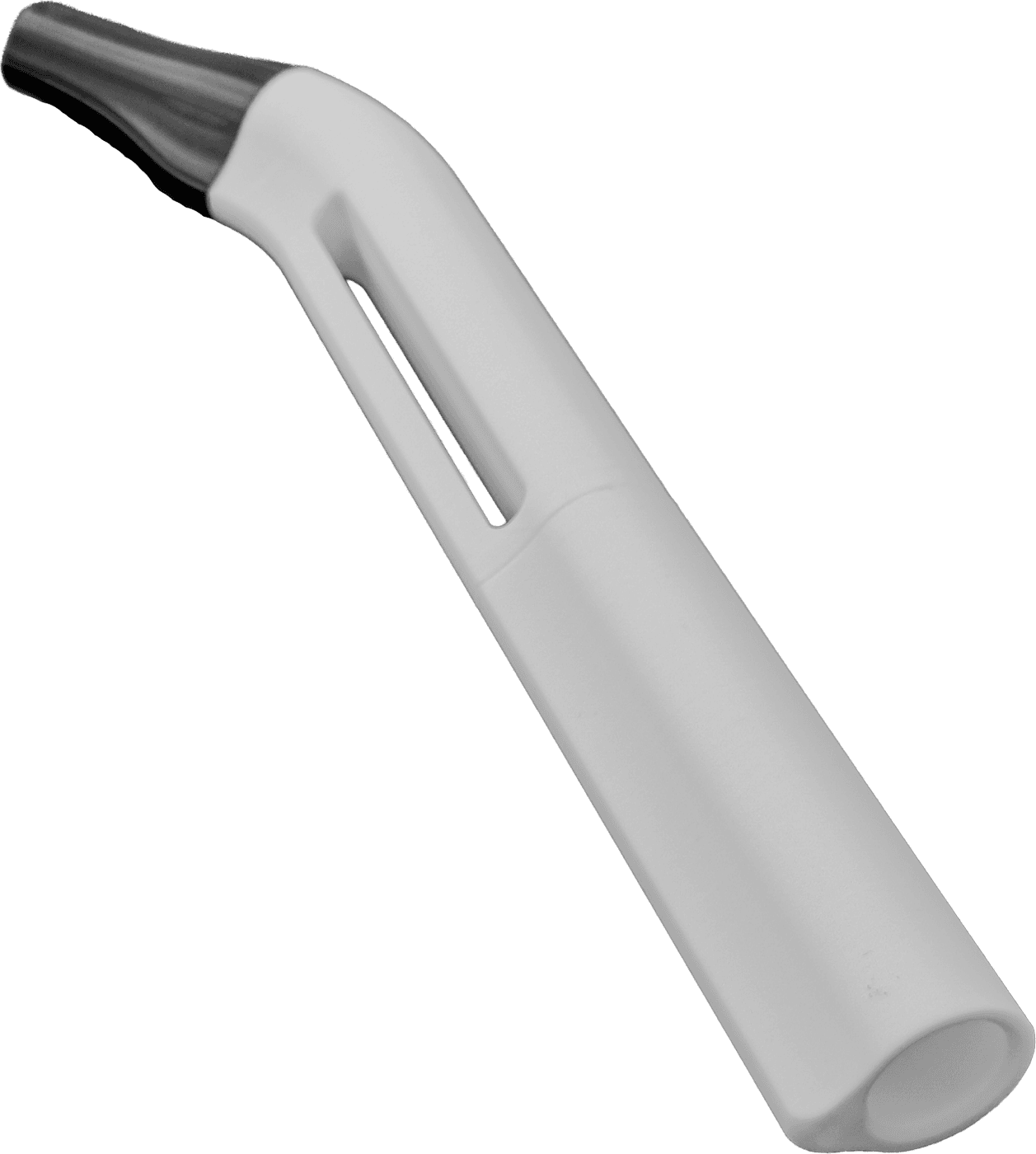
I dropped the pump in favor of a simpler mechanical system that siphons the boiling water, which streamlined the part that sits in the pot. The valve was designed around off the shelf quick release fittings, with the ergonomics dialed in for one handed operation.
Final Model
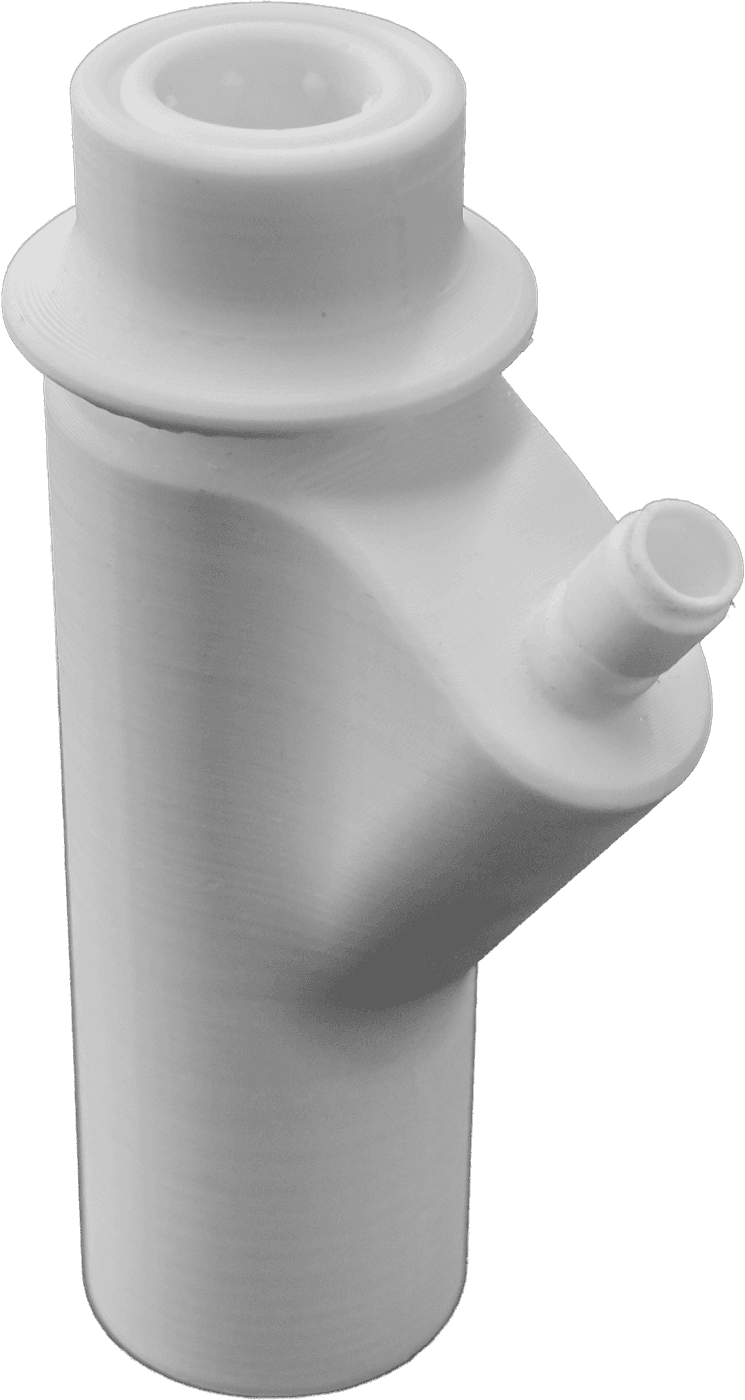
A resin printed valve body, pressure washer quick release fittings and hose, and an FDM printed wand and painted flanges.
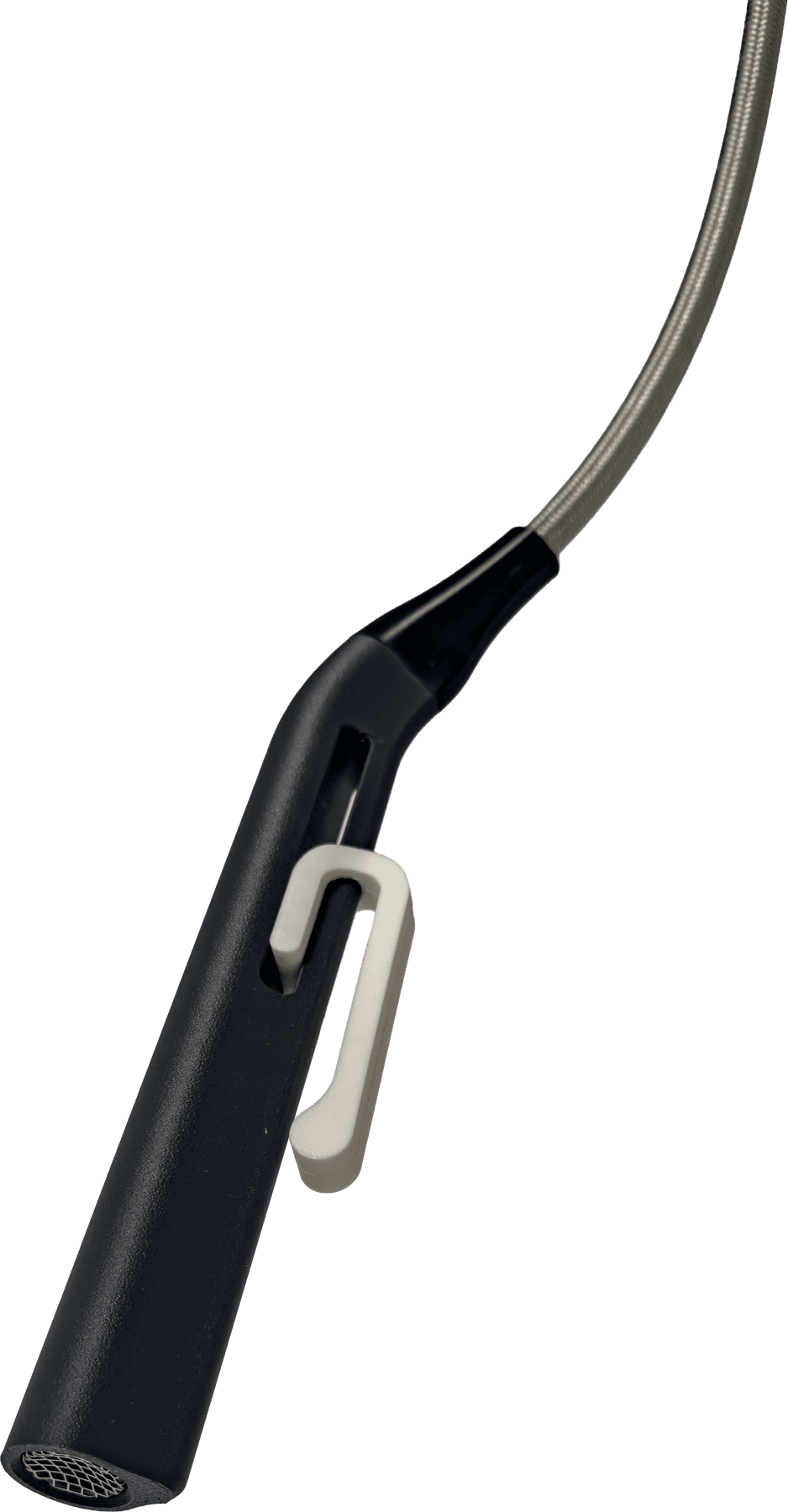
Wand: an adjustable clip fits different pot sizes, and a mesh barrier keeps food out of the hose.
Quick-release connection, with its opposing flanges.
Use instructions
Connect it, then fill and drain.
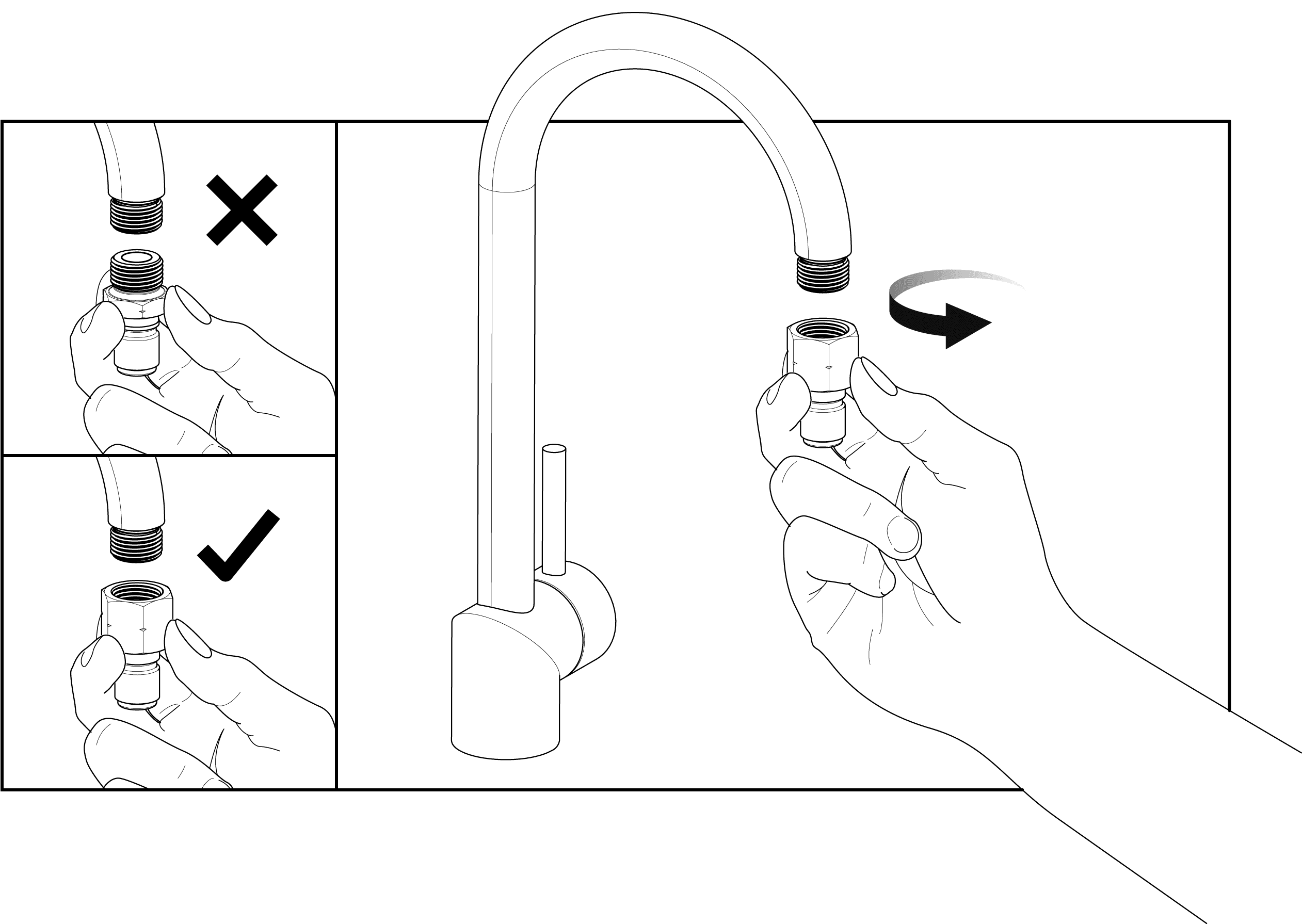
Setup: Choose the right adapter for your sink.
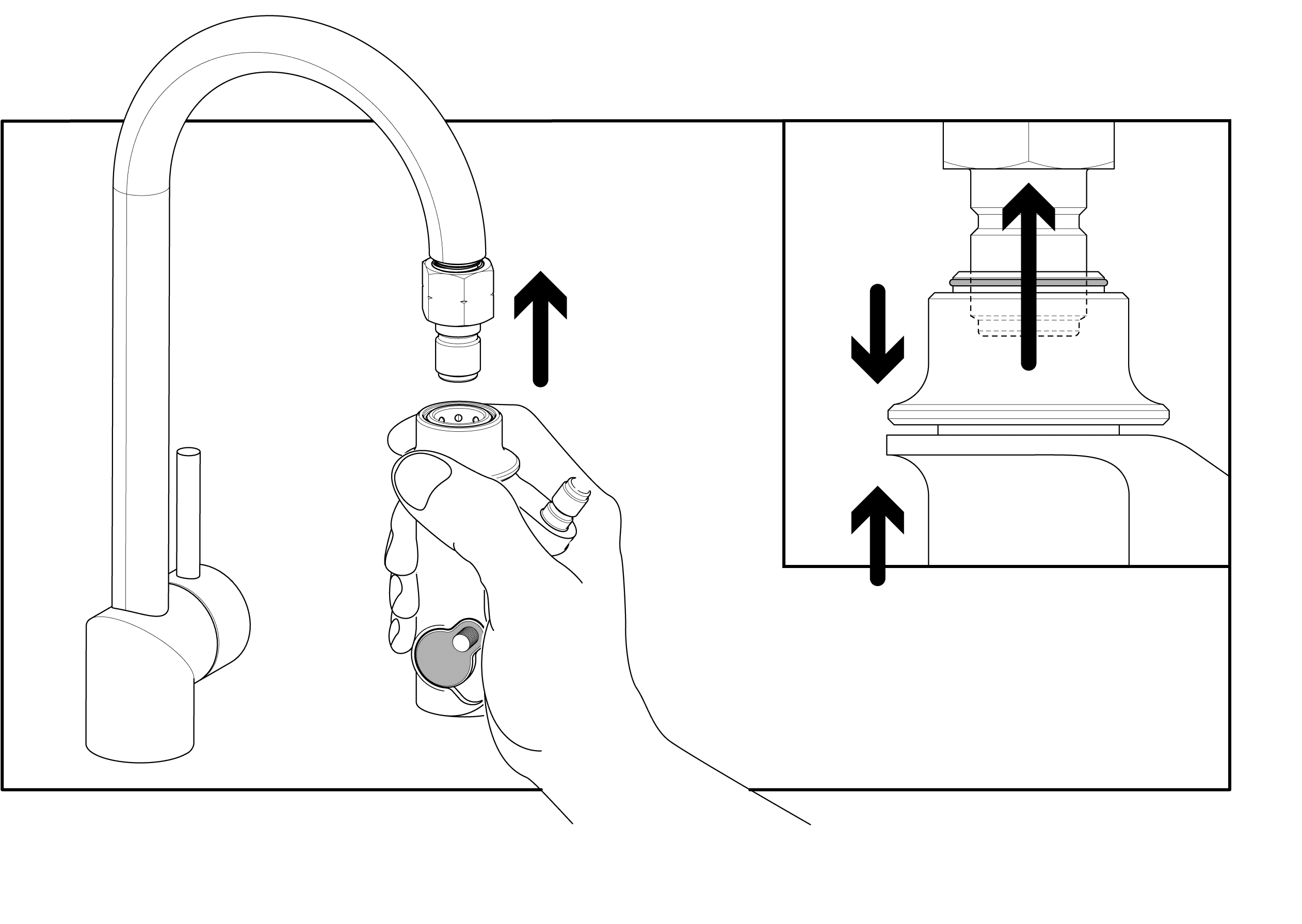
Step 1: Pull down the flange on the valve while sliding it onto the adapter.
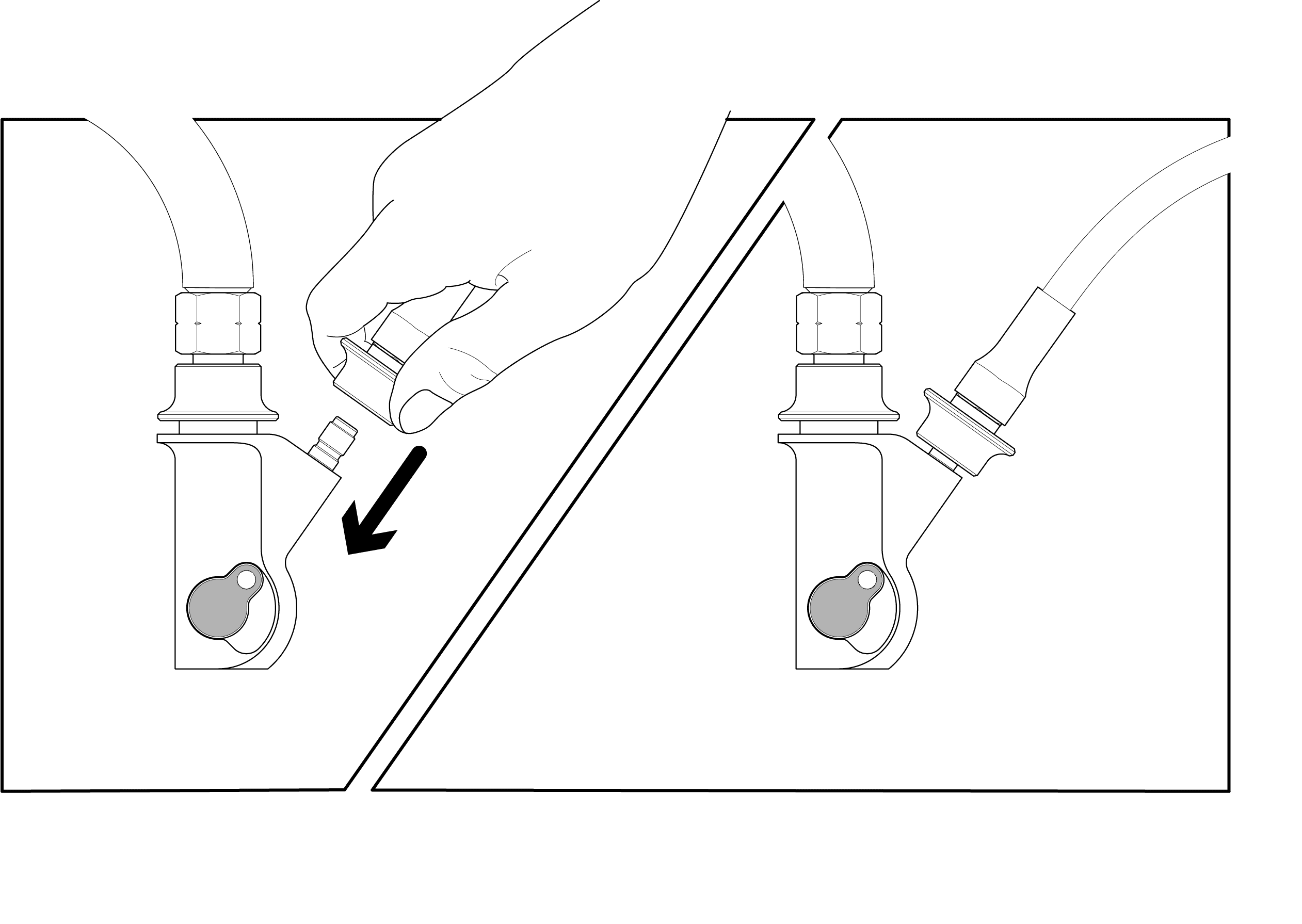
Step 2: Attach the hose to the valve.
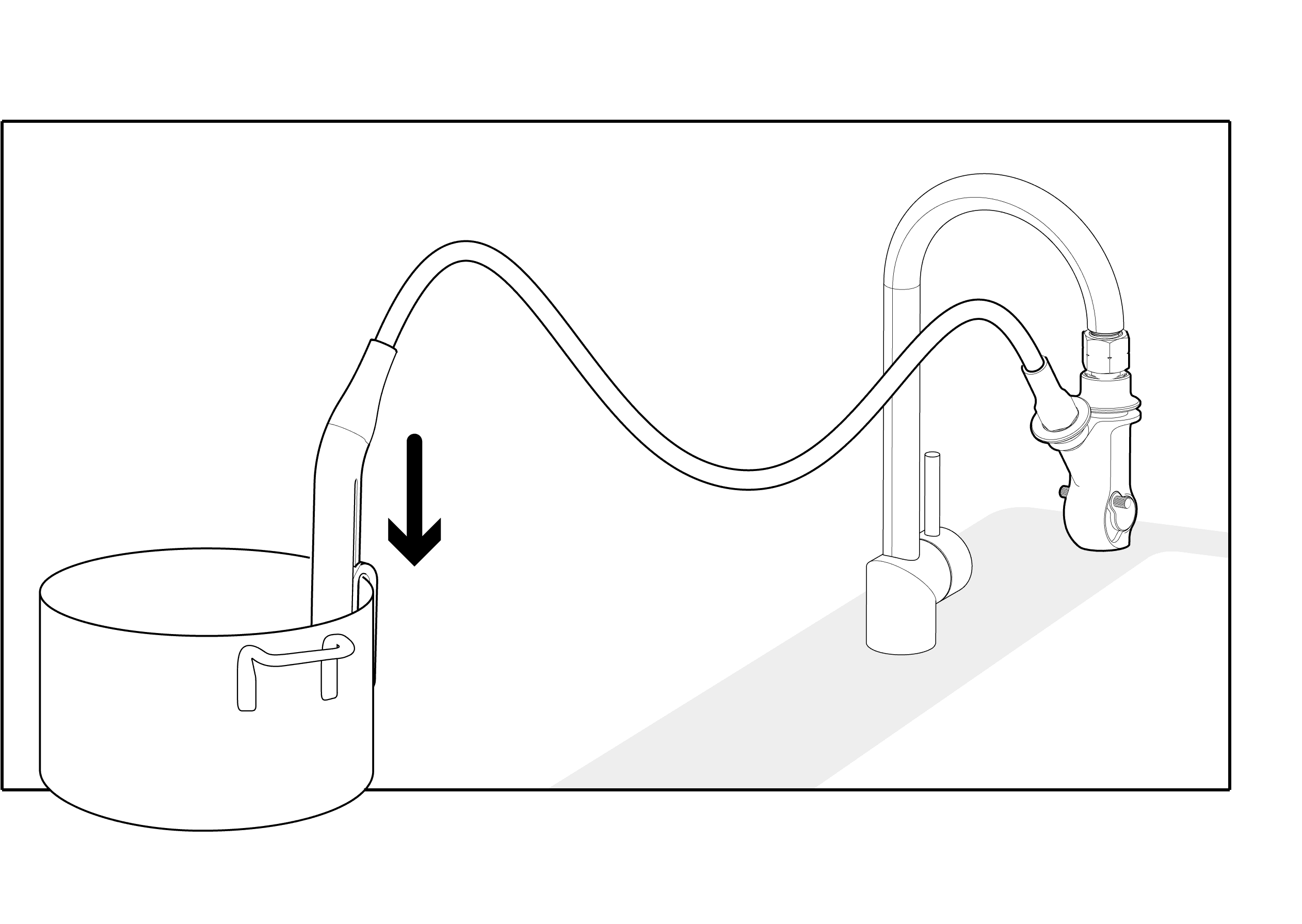
Step 3: Place the wand in the pot and slide the clip down over the rim.
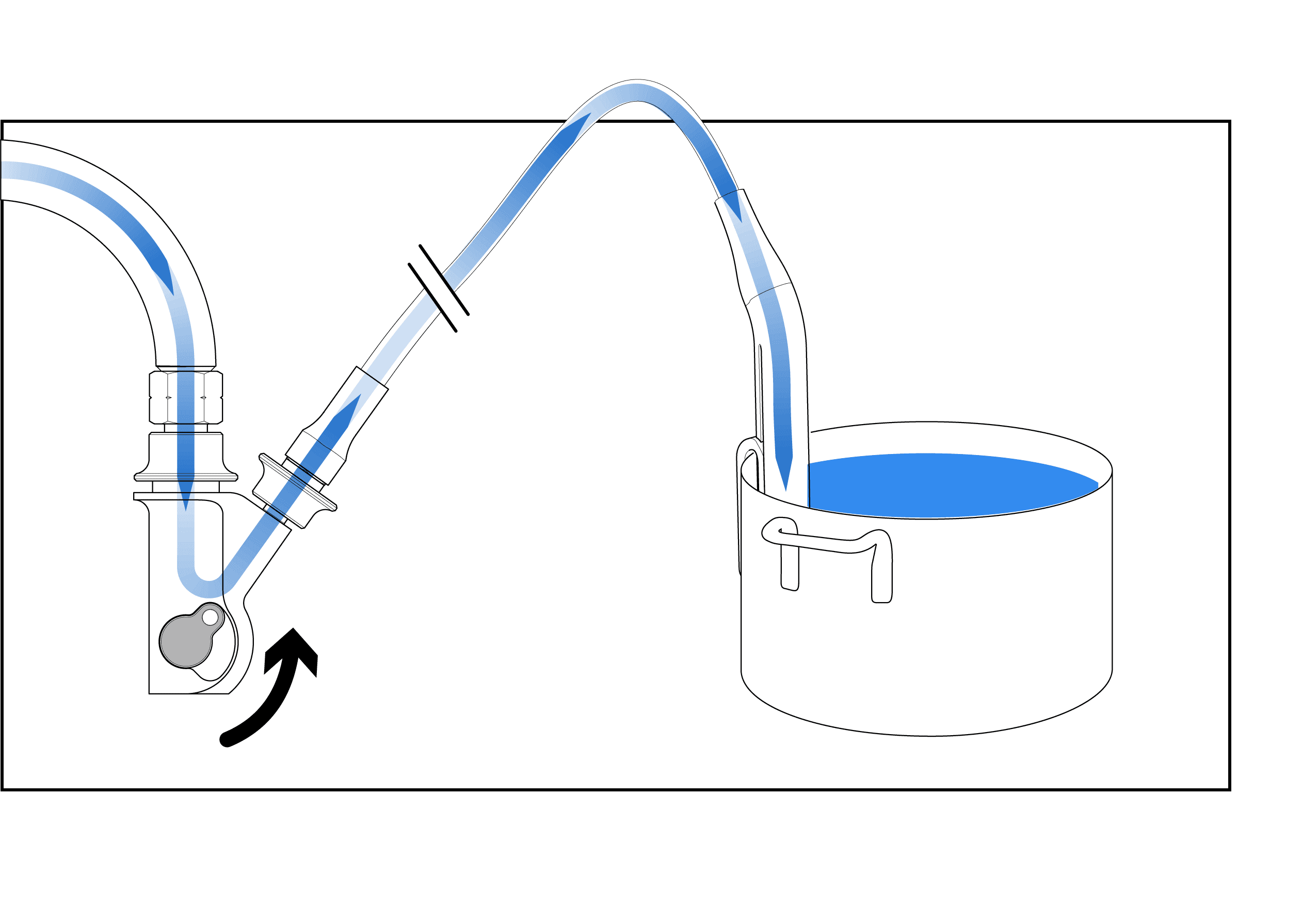
Step 4: Fill
Rotate the valve into the top position. Turn the faucet on to fill the pot.
Step 5: Drain
Turn the faucet on, and then rotate the valve to the lower position.
Experimenting with Vizcom
I had Vizcom, an AI tool, make the backsplash and lighting of the KeyShot render more realistic.
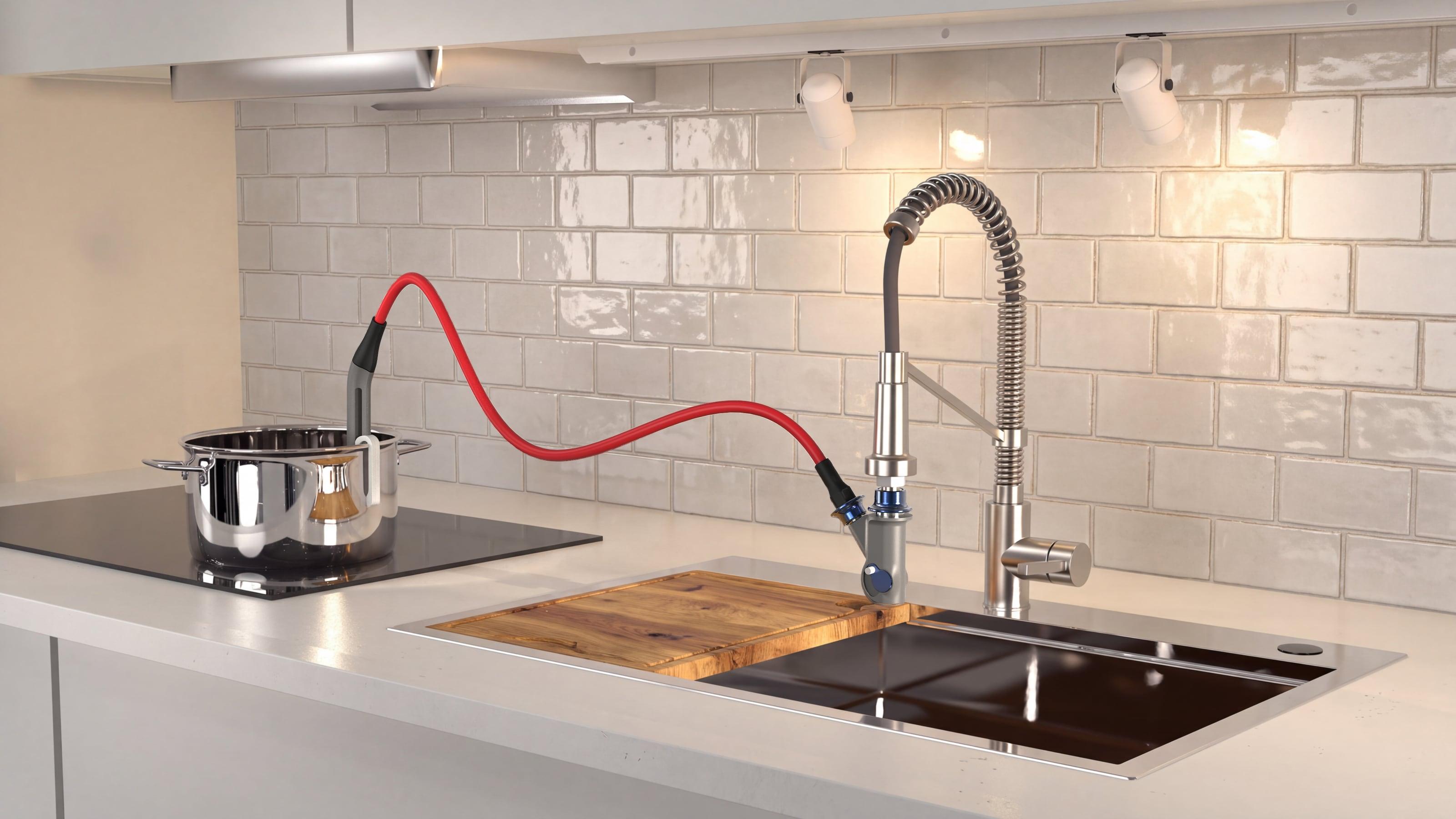
KeyShot render.
After Vizcom (AI-modified).
SIPHON
Accessibility does not have to mean designing exclusively for people with disabilities. Without the visual language of a medical device, SIPHON could improve safety and independence in the kitchen for almost anyone.